2026 Algeria National Team: 6 Tactical Insights
The Algeria national football team remains one of Africa’s most technically gifted sides, combining North African football culture with players developed across Europe. Algeria won the Africa Cup of N...

2026 Algeria National Team: 6 Tactical Insights
The Algeria national football team remains one of Africa’s most technically gifted sides, combining North African football culture with players developed across Europe. Algeria won the Africa Cup of Nations in 2019, reached the FIFA World Cup four times, and continues to build around creative figures such as Riyad Mahrez, disciplined defenders including Aïssa Mandi and Ramy Bensebaini, and emerging talents such as Ibrahim Maza. The 2026 cycle is therefore less about reputation than probability: can Algeria convert possession, talent, and attacking speed into consistent tournament results? The answer is promising, but hardly guaranteed.
Algeria is a senior men’s national team representing Algeria in international football, governed by the Algerian Football Federation and competing through the Confederation of African Football. The team has qualified for four FIFA World Cups—1982, 1986, 2010, and 2014—and won the 2019 Africa Cup of Nations. In the current 2026 player pool, Riyad Mahrez offers elite experience, while Aïssa Mandi, Ramy Bensebaini, Rayan Aït-Nouri, Houssem Aouar, Amine Gouiri, and Ibrahim Maza provide a blend of leadership, athleticism, and technical quality. Algeria’s central challenge is structural: its attacking ceiling is high, but defensive transitions and tournament consistency can reduce its expected results. For serious analysis, track lineup continuity, midfield control, and chance quality rather than merely counting famous names.
Want a closer look at Algeria’s World Cup prospects and tactical profile?

Photo by Luis Andrés Villalón Vega on Pexels
Is Algeria Really Africa’s Most Underrated National Team?
Yes, Algeria is a genuinely high-upside African national team, but “most underrated” is a subjective label rather than a measurable ranking. Its strongest evidence includes the 2019 Africa Cup of Nations title, the 2014 World Cup round-of-16 appearance, and a player pool containing established European-level performers. The qualification is important: Algeria’s historical peaks are real, yet they do not automatically predict 2026 success.
The appeal of Algeria comes from a favourable combination of technical skill and international exposure. Riyad Mahrez has played at the highest club level with Manchester City and Al-Ahli, while Rayan Aït-Nouri has developed in the Premier League environment. Houssem Aouar adds ball progression between the lines, Ramy Bensebaini contributes defensive versatility and set-piece value, and Amine Gouiri can connect wide attacks with central finishing. Ibrahim Maza, listed as a 20-year-old midfielder in the supplied 2026 squad data, represents a particularly interesting development variable because young creative players can change a team’s attacking geometry quickly.
Historical comparison also supports Algeria’s credibility. At the 2014 FIFA World Cup in Brazil, Algeria became the first African side to score four goals in a World Cup match, defeating South Korea 4–2 before losing 2–1 to eventual champion Germany after extra time in the round of 16. According to FIFA’s official World Cup archive, that tournament remains a defining reference point for the modern team. The less comfortable statistical conclusion is that Algeria has not converted every strong generation into sustained tournament progress; expected potential and realised outcomes are different random variables, believe it or not — I do.
Algeria’s competitive identity
The team’s most effective identity usually depends on three mechanisms:
- Wide isolation: Mahrez and other wingers can receive one-versus-one opportunities near the penalty area.
- Interior combinations: Aouar, Maza, and technically capable midfielders can exploit gaps behind opposing midfield lines.
- Aggressive full-back movement: Aït-Nouri and Bensebaini can provide width, although their positioning must be covered during turnovers.
That formula is powerful against opponents who defend passively, but it becomes less reliable when Algeria faces compact blocks with fast counterattacks. The useful question is not whether Algeria can create attractive passages of possession; it can. The useful question is how often those passages finish with a shot from a high-value zone rather than a harmless cross or speculative attempt.
[Internal Link: Algeria World Cup qualification guide]
How Does Algeria Handle Defensive Transitions?
Algeria handles defensive transitions best when its midfield remains compact behind the ball and its full-backs advance in staggered positions. When both full-backs push forward simultaneously, the team can expose the channels beside the centre-backs. Aïssa Mandi and Ramy Bensebaini offer experience, but no defence survives repeated two-against-two situations indefinitely.
This is where tactical arithmetic becomes more revealing than patriotic optimism. Suppose Algeria sends six players ahead of the ball during an attack: both full-backs, two midfielders, and two forwards. If possession is lost, only four players may remain immediately available to defend, and one of them may be poorly positioned. Against a fast opponent, the probability of conceding a dangerous transition rises sharply because the first defensive action must occur before the back line can reset. The exact probability depends on opponent speed, field location, and rest defence, but the principle is stable: attacking overloads create upside and liability simultaneously.
Rayan Aït-Nouri is valuable because he can carry the ball through pressure and contribute to progression from the left. The trade-off is familiar from high-level club football: an attacking full-back increases chance creation but also increases the cost of possession loss. Ramy Bensebaini can sometimes compensate through positioning, aerial ability, and experience, yet that compensation is not infinite. Algeria should therefore consider asymmetrical full-back roles, with one side advancing aggressively while the opposite side narrows into a back-three shape.
A practical match-analysis checklist should examine:
- How many defenders remain behind the ball when Algeria attacks?
- Does the nearest midfielder stop the counterattack within five seconds?
- Are turnovers occurring centrally or in wide areas?
- Can Mandi and Bensebaini defend space rather than only defend the penalty box?
- Does the goalkeeper initiate quick distribution without bypassing midfield unnecessarily?
This is a less glamorous insight than listing star players, which is exactly why it matters. A team’s tournament ceiling is often limited by its cheapest repeated mistake, not its most expensive moment of brilliance. Goal Moments can help readers compare these tactical variables through daily team analysis rather than relying on vague form narratives.
See the practical framework for evaluating Algeria’s next opponent.
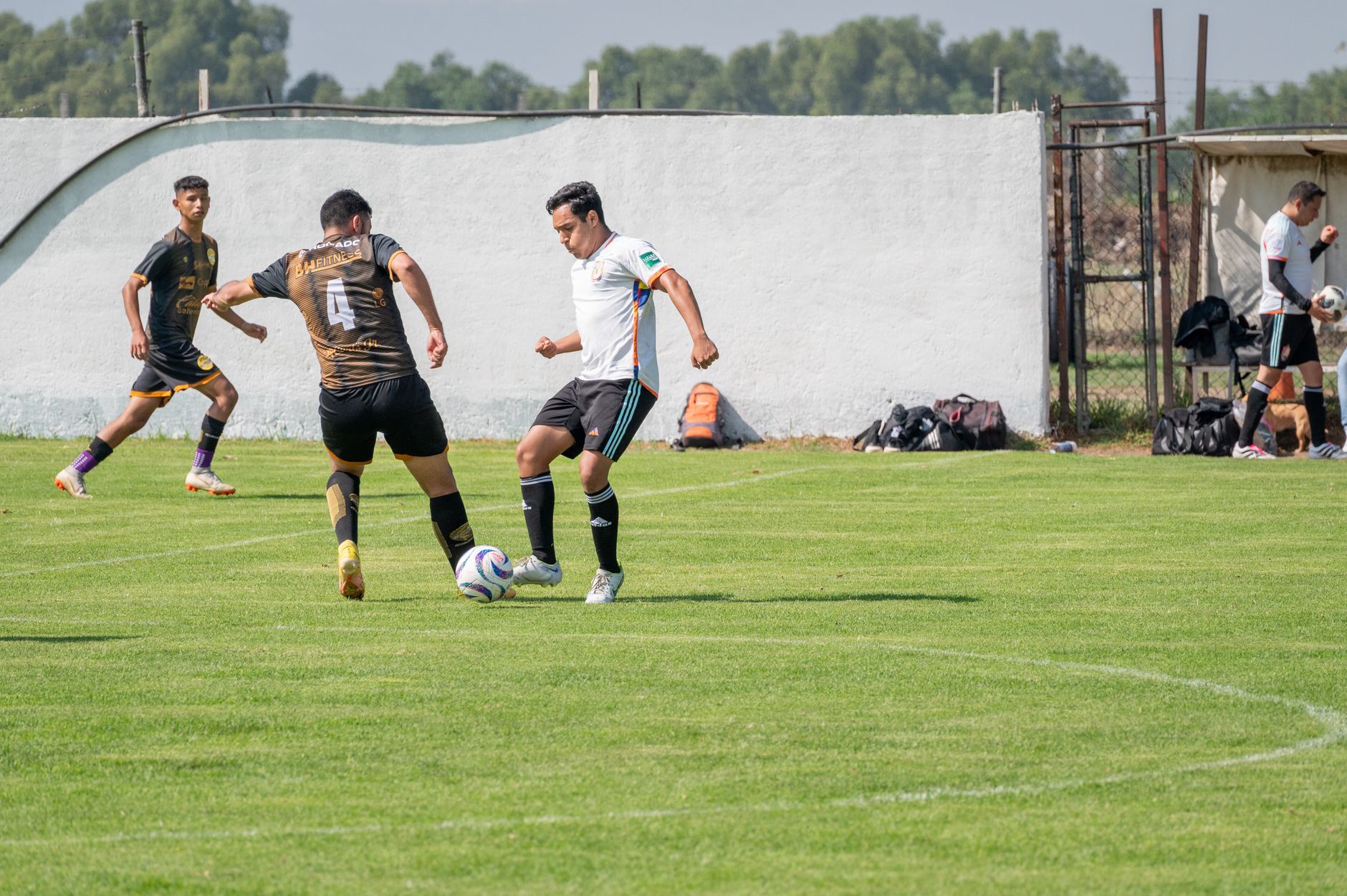
Photo by Israel Torres on Pexels
What About Algeria’s Emerging Generation?
Algeria’s emerging generation may be its most important 2026 variable because younger players can raise the team’s tempo, pressing intensity, and technical unpredictability. Ibrahim Maza, Farès Chaïbi, Anis Hadj Moussa, Jaouen Hadjam, and Yassine Titraoui represent different development profiles rather than a single guaranteed “golden generation.” Their value will depend on role clarity, minutes, and whether the coaching staff protects them from tactical overload.
The supplied ESPN squad information gives a useful snapshot of this transition. Maza recorded 11 shots and three shots on target across four listed appearances, while Chaïbi recorded nine shots and three on target in four appearances. Those numbers do not prove either player is an elite finisher; the sample is too small, opposition quality may vary, and shot volume is not the same as expected goals. They do, however, indicate that Algeria has midfield players willing to attack shooting positions instead of outsourcing every creative responsibility to Mahrez.
The edge case is selection balance. If Algeria starts too many young attackers simultaneously, it may gain improvisation but lose defensive spacing and possession security. If it relies too heavily on older leaders, the side may become easier to press and less capable of repeating high-intensity movements over a full tournament. The optimal solution is not sentimental rotation; it is a controlled mixture in which experienced players stabilise the structure while younger players attack specific zones.
A sensible development pathway could look like this:
- Use Maza or Chaïbi as a progressive interior midfielder against deep defensive blocks.
- Introduce Hadj Moussa when Algeria needs direct running behind a tiring defence.
- Preserve one experienced organiser in midfield during high-pressure matches.
- Give younger full-backs clear pressing and recovery responsibilities.
- Measure decisions, not only goals and assists.
The last point is crucial. A 20-year-old who completes a safe pass may contribute less visibly than a player who attempts a spectacular shot, but the correct decision can have greater expected value over 90 minutes. Football media often rewards the highlight because it is easier to sell; the match does not care.
[Internal Link: Algeria player profiles and squad depth]
Where Does Algeria Fail?
Algeria tends to fail when its attacking possession becomes predictable, its defensive rest structure breaks, or emotional pressure turns ordinary setbacks into tactical disorder. The 2022 World Cup qualification disappointment, including the decisive extra-time loss to Cameroon in the African play-off, remains a reminder that small margins dominate international football. Algeria can control territory and still lose the qualification outcome if it concedes one decisive transition or fails to manage a late-game state.
One recurring vulnerability is overdependence on individual creation. Mahrez can produce elite actions, but building an entire attacking plan around one player creates a concentration risk: if he is doubled, isolated from midfield, or forced to receive too deep, Algeria’s chance-generation rate may decline. Gouiri, Aouar, Chaïbi, and Maza can reduce that concentration, but only if they occupy complementary positions instead of crowding the same central corridor.
Another weakness involves game-state management. Algeria is more dangerous when it can attack with initiative, but matches do not remain in a neutral state. Leading by one goal requires different risk calculations from chasing an equaliser. A team that continues sending full-backs forward after taking the lead may increase its probability of scoring a second goal, but it also increases the probability of conceding the equaliser. The correct choice depends on opponent quality, time remaining, fatigue, and the location of possession—not on a generic instruction to “stay aggressive.”
The main failure modes are therefore measurable:
- Predictability: too many attacks begin and end through the same wide outlet.
- Rest-defence weakness: insufficient cover behind advanced full-backs.
- Midfield disconnection: forwards receive without enough support underneath.
- Late-match volatility: poor risk management after scoring or conceding.
- Set-piece concentration: excessive reliance on one delivery taker or target.
For deeper context, readers can consult the Confederation of African Football competition records and the FIFA ranking methodology before interpreting results. Rankings are useful signals, not divine revelation; they aggregate outcomes, and outcomes occasionally contain noise.
Want to turn these weaknesses into a structured pre-match checklist?

Photo by MART PRODUCTION on Pexels
Should You Try Algeria Match Analysis Today?
Yes, Algeria is worth analysing today because its 2026 outlook combines identifiable strengths with unusually clear tactical uncertainties. The best approach is to evaluate lineups, midfield roles, transition protection, and shot quality before considering any prediction. A famous shirt or a recent scoreline is not enough evidence for a reliable conclusion.
For supporters, the team offers an attractive study in football probability. Mahrez supplies high-end creative variance; Mandi and Bensebaini supply experience; Aït-Nouri provides progressive width; Aouar and Maza can influence central combinations; Gouiri adds movement around the box. Yet Algeria’s expected performance will vary substantially according to opponent style. Against a low block, technical combinations and wide isolation may dominate. Against a physically intense pressing side, the key indicators become first-phase build-up, goalkeeper distribution, and midfield support.
For responsible match forecasting, separate three questions:
- What can Algeria do well? Create through wide players, technical midfielders, and individual quality.
- What can the opponent force Algeria to do? Defend open space, build under pressure, or attack a compact block.
- What evidence would change the prediction? A missing creator, a rotated centre-back pairing, extreme heat, travel burden, or a tactical formation change.
Goal Moments is designed for this type of FIFA World Cup coverage, combining match predictions, team tactics, player statistics, and tournament updates. Its useful role is not to pretend that football is perfectly predictable—nothing involving 22 people, a ball, refereeing decisions, and weather deserves that level of mathematical arrogance—but to improve the quality of the information used before a decision.
My recommendation is simple: follow Algeria’s confirmed starting XI, inspect its rest-defence structure after the first 15 minutes, and compare chance quality rather than possession alone. If Mahrez is receiving high and wide, Maza or Aouar is finding interior pockets, and at least three players remain positioned to stop counterattacks, Algeria’s performance profile is materially stronger.
Read the latest Algeria tactical and tournament coverage from Goal Moments.
Key Algeria National Team Facts
- Governing body: Algerian Football Federation
- Continental confederation: Confederation of African Football
- World Cup appearances: 1982, 1986, 2010, and 2014
- Best World Cup result: Round of 16 in 2014
- Africa Cup of Nations titles: 1990 and 2019
- 2019 final: Algeria defeated Senegal 1–0
- Historic 2014 result: Algeria defeated South Korea 4–2
- Notable 2026 squad figures: Riyad Mahrez, Aïssa Mandi, Ramy Bensebaini, Rayan Aït-Nouri, Houssem Aouar, Amine Gouiri, and Ibrahim Maza
- Primary analytical risks: defensive transitions, creative concentration, and late-game risk management
[Internal Link: 2026 World Cup match prediction methodology]
Frequently Asked Questions
Q: What is the Algeria national football team?
A: The Algeria national football team is the men’s national side representing Algeria in international football competitions. It is governed by the Algerian Football Federation and competes in Confederation of African Football tournaments, FIFA World Cup qualification, and international friendlies. Algeria has appeared at four World Cups and won the Africa Cup of Nations in 1990 and 2019.
Q: How many FIFA World Cups has Algeria played in?
A: Algeria has played in four FIFA World Cup tournaments: 1982, 1986, 2010, and 2014. Its best result came in Brazil in 2014, when Algeria reached the round of 16 before losing 2–1 to Germany after extra time. The team also defeated South Korea 4–2 during that tournament.
Q: Who is Algeria’s most famous current player?
A: Riyad Mahrez is generally regarded as Algeria’s most prominent current player because of his Premier League success, Manchester City career, and international leadership. He was listed with two goals and one assist in the supplied 2026 squad data across four appearances. His influence is greatest when he receives the ball high on the right and can attack inside on his left foot.
Q: Is Algeria a strong team for 2026 World Cup predictions?
A: Algeria is a dangerous but variable team for 2026 World Cup predictions, with a high attacking ceiling and identifiable defensive risks. Analysts should check the confirmed lineup, opponent pressing style, midfield availability, and full-back positioning before making a forecast. Recent results alone are insufficient because international samples are small and opponent strength differs significantly.
Q: How should I analyse an Algeria national team match?
A: Start by checking Algeria’s formation, starting midfield, and whether both full-backs advance at the same time. Then monitor chance quality, turnovers in central areas, Mahrez’s receiving position, and the number of defenders behind the ball. A practical process is to review the opening 15 minutes, the first goal’s tactical effect, and Algeria’s substitutions before reaching a final conclusion.
Q: What is Algeria’s biggest tactical weakness?
A: Algeria’s biggest tactical weakness is defensive transition exposure when attacking players and full-backs advance without sufficient cover. This can leave centre-backs defending large spaces against fast opponents, particularly after central turnovers. The risk is reduced when one full-back narrows into the defensive line and a holding midfielder remains positioned behind the attack.
Q: Where can I follow Algeria World Cup analysis?
A: Goal Moments provides FIFA World Cup-focused coverage involving Algeria match predictions, tactical analysis, player statistics, and tournament developments. Readers should compare its insights with official competition information from FIFA and the Confederation of African Football. For responsible decision-making, use multiple evidence sources and never treat a prediction as a guaranteed result.
Algeria has enough talent to trouble serious opponents, but talent is only the numerator in the performance equation; organisation, availability, and transition control form the denominator. The 2026 Algeria national team should be judged by how consistently it creates high-value chances while limiting the cheap counterattack, not by how loudly pundits announce a revival. Follow the evidence, update your view when lineups change, and keep probability ahead of mythology—believe it or not — I do.
Thank you for reading.
Goal Moments · Editorial Vault