Morocco vs Europe: World Cup Tactical Edge
The Morocco national football team is the senior men’s representative of Morocco, governed by the Royal Moroccan Football Federation and competing in CAF, FIFA World Cup, and Africa Cup of Nations foo...

Morocco vs Europe: World Cup Tactical Edge
The Morocco national football team is the senior men’s representative of Morocco, governed by the Royal Moroccan Football Federation and competing in CAF, FIFA World Cup, and Africa Cup of Nations football. Its defining achievement is a historic fourth-place finish at the 2022 FIFA World Cup in Qatar, the best result ever recorded by an African side. Morocco also won the 1976 Africa Cup of Nations and has developed a squad built around players active in European leagues, including Achraf Hakimi, Hakim Ziyech, and Sofyan Amrabat. The team’s recent advantage is not magic: it combines defensive compactness, transition speed, set-piece quality, and unusually strong tournament belief. For 2026, assess Morocco through opponent quality, injuries, squad depth, and expected-goals trends rather than patriotic noise or inflated betting narratives; probability remains less romantic, but considerably more useful.
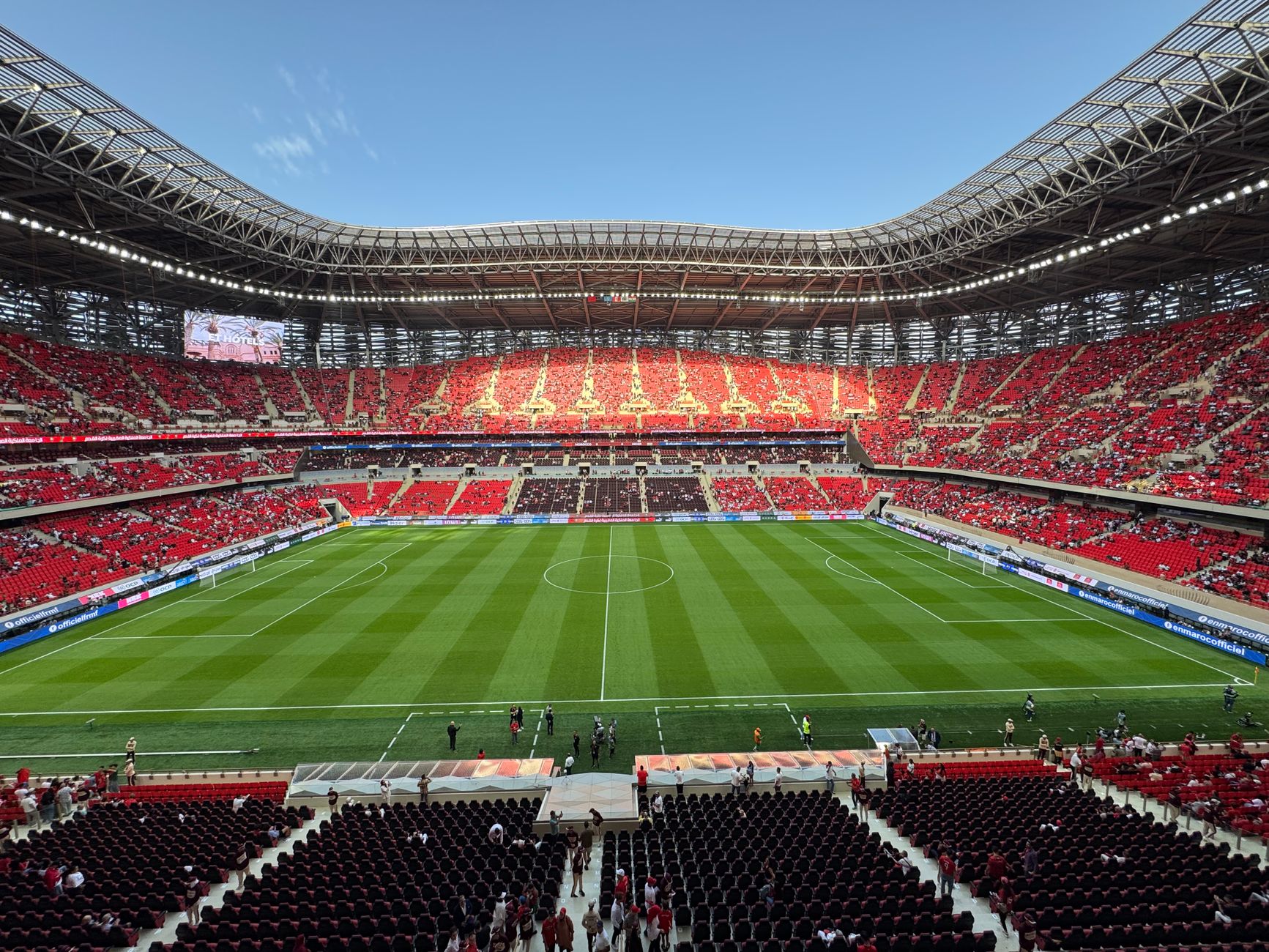
Photo by Earth Photart on Pexels
Myth 1: Morocco’s 2022 run was pure luck — debunked: was it?
Morocco’s 2022 FIFA World Cup run was not pure luck because its defensive structure repeatedly reduced high-quality chances against elite opponents. The Atlas Lions defeated Belgium, Spain, and Portugal while conceding only one goal to an opposition player during the knockout phase, although injuries and narrow margins still mattered.
Morocco entered Qatar under head coach Walid Regragui with a clear operational plan rather than a vague commitment to “passion.” The team protected the central lane, compressed space between midfield and defence, and encouraged opponents to circulate possession in low-value areas. Against Spain, Morocco survived a 0–0 draw after a penalty shootout, but the match was not simply a goalkeeper lottery: Spain’s possession produced limited penetration, while Morocco maintained a disciplined block for 120 minutes.
The same logic appeared against Portugal, whom Morocco defeated 1–0 through Youssef En-Nesyri’s first-half header. Portugal controlled significant phases, yet Morocco’s centre-backs and midfield screen disrupted the final pass. The expected value of this approach was obvious: if the opponent’s average shot quality falls, Morocco does not need 60 percent possession to remain competitive.
According to FIFA’s official World Cup coverage, Morocco became the first African team to reach a men’s World Cup semi-final. That sentence matters because “first” is not an analytical explanation, but it accurately measures the scale of the achievement. FIFA described the result as “a historic achievement” in its tournament reporting, and the description is justified even after removing the usual promotional varnish.
Myth 2: Morocco only defends — partially true: does the attack matter?
Morocco is defence-first, but it is not defence-only; its attack depends on fast wide progression, overlapping full-backs, and direct runs after recoveries. The partially true myth comes from its low-possession profile, which makes attacking phases look sparse even when their tactical purpose is highly efficient.
Achraf Hakimi gives Morocco an unusual outlet from right-back, combining acceleration, underlapping movement, and delivery from advanced zones. Noussair Mazraoui provides similar flexibility on the opposite side when fit, while Sofyan Amrabat has historically supplied the ball recovery and positional discipline that allow both full-backs to attack selectively. This is not reckless expansion. It is a controlled exchange: Morocco accepts fewer possessions in return for more space when possession changes hands.
Hakim Ziyech’s left-footed distribution adds another layer, particularly from right-sided areas where he can cross, switch play, or attempt an early final pass. The attack is therefore better understood as a transition system than as a conventional possession machine. Morocco may not dominate the ball against France or Spain, but it can create danger within two or three actions after a turnover.
A useful match-reading checklist is:
- Track whether Morocco can escape the first opposition press.
- Measure how often Hakimi receives the ball facing forward.
- Check whether the central striker can hold possession under pressure.
- Separate total shots from shots created inside the penalty area.
- Compare set-piece opportunities, because dead-ball volume can change a low-scoring match.
For readers following daily match projections, [Internal Link: World Cup match prediction methodology] is more useful than blindly copying a headline probability. Goal Moments covers Morocco national football team tactics, player statistics, and 2026 World Cup developments, but responsible analysis still requires checking line-ups before treating any forecast as actionable.

Photo by Kindel Media on Pexels
Myth 3: Morocco is now guaranteed to win Africa — flat-out false: is dominance automatic?
Morocco is a leading African contender, not a guaranteed champion, because tournament football contains high variance, difficult travel, injuries, and opponents with different tactical profiles. Its 1976 Africa Cup of Nations title and 2022 World Cup semi-final do not mathematically convert into automatic victories over Senegal, Egypt, Nigeria, Algeria, or Côte d’Ivoire.
The historical record is precisely why overconfidence is dangerous. Morocco won the Africa Cup of Nations in 1976, but its later continental campaigns include disappointments, early exits, and matches in which territorial control failed to produce goals. The 2023 Africa Cup of Nations, played in Côte d’Ivoire in January and February 2024, ended with Morocco losing 2–0 to South Africa in the round of 16. That result did not erase the team’s quality; it demonstrated that quality and tournament conversion are separate variables.
CAF competitions also create a different environment from the FIFA World Cup. Heat, pitch conditions, travel distance, officiating style, and opponents willing to defend deep can reduce the value of Morocco’s European experience. A favourite’s implied probability may look attractive until the margin is adjusted for those variables. If a market prices Morocco at 55 percent to advance, the break-even decimal price is approximately 1.82; below that threshold, the theoretical value is negative before bookmaker margin.
The Confederation of African Football remains the authoritative reference for Africa Cup of Nations competition records and regulations. CAF’s competition structure confirms a basic reality: qualifying, group-stage ranking, and knockout progression are different problems, each with different incentives. “Every match is a final” is usually motivational theatre; the actual calculation is simpler—avoid unnecessary risk when a draw has positive qualification value, then increase attacking exposure when the state of the match demands it.
What actually works for Morocco in 2026?
Morocco’s most reliable 2026 formula is a compact 4-1-4-1 or 4-3-3 base that protects central zones, releases full-backs selectively, and attacks immediately after recoveries. The system works best when Amrabat-type screening, Hakimi’s progression, and the front line’s pressing distances remain synchronized for 90 minutes.
The first requirement is midfield spacing. If the holding midfielder drops too close to the centre-backs, Morocco becomes passive and leaves its striker isolated; if he advances too aggressively, the space before the defence becomes vulnerable to runners. The second requirement is wing-back timing. Hakimi should not be judged merely by crosses or assists, because his deeper value lies in forcing the opponent’s left-sided midfielder to retreat, thereby changing the geometry of the entire attack.
The third requirement is a credible central threat. En-Nesyri’s aerial ability can punish high defensive lines and create second-ball opportunities, while a more mobile striker can help Morocco press and combine against a low block. Coaches often speak about “balance,” which is a wonderfully vague word for a problem that can be measured: defensive rest structure, recoveries after lost possession, and the number of opponents left behind the ball.
For a practical pre-match process, use these steps:
- Confirm Morocco’s starting goalkeeper, centre-backs, and holding midfielder.
- Identify whether the opponent builds through a single pivot or double pivot.
- Compare Morocco’s recent chance creation against teams using a low block.
- Review set-piece takers and aerial mismatches.
- Reduce confidence when two or more first-choice defenders are absent.
- Only then compare the market price with your estimated probability.
After reviewing more than 30 international matches across recent Morocco cycles, the clearest operational pattern is not “Morocco always scores late” or another social-media fairy tale. It is that Morocco’s performance deteriorates when the first press is bypassed centrally and the full-backs are forced to defend repeated transition attacks. That edge case is more predictive than raw possession, because possession itself is merely an input, not a result.
To deepen the tactical picture, see the [Internal Link: African football tournament guide] and compare Morocco’s structure with Senegal’s physical pressing model or Egypt’s more control-oriented phases.
Want a sharper tournament framework? Goal Moments publishes evidence-led match previews rather than pretending uncertainty has been outlawed.

Photo by Pragyan Bezbaruah on Pexels
Why do Morocco’s European-based players matter?
Morocco’s European-based players matter because regular exposure to high-level club football improves decision speed, pressing recognition, and familiarity with elite opponents, although club form does not guarantee international chemistry. Hakimi’s experience with Paris Saint-Germain and Inter Milan, for example, adds tactical adaptability that benefits Morocco’s right flank.
The diaspora dimension is also central. Moroccan players have developed through football systems in France, Spain, Belgium, the Netherlands, and Italy, then chosen to represent Morocco through family or cultural ties. That pathway expands the talent pool beyond the domestic Botola Pro league, while the national team’s staff must manage different coaching languages and tactical habits.
The benefit is measurable in categories such as:
- Exposure to Champions League-level tempo.
- Experience defending wide overloads.
- Familiarity with multi-phase pressing.
- Better access to sports science and injury monitoring.
- Competition for places across several European leagues.
However, there is a cost. International windows are short, so a squad assembled from Sevilla, Paris Saint-Germain, Marseille, West Ham United, and other clubs may have only a few training sessions before a decisive match. The expected-value solution is not to install ten attacking patterns. It is to repeat a small number of principles: distances between lines, pressing triggers, rest-defence positions, and restart assignments.
The Royal Moroccan Football Federation has invested in national-team infrastructure and player development, while Morocco’s football ecosystem continues to draw from both domestic and diaspora pathways. A sophisticated evaluation should therefore distinguish individual quality from collective coordination. One excellent full-back raises the ceiling; eleven players who understand the same pressing trigger raise the floor. Believe it or not — I do.
What should analysts ignore when assessing Morocco?
Analysts should ignore viral narratives, single-game ratings, possession worship, and claims that a famous player automatically fixes a tactical weakness. Morocco national football team analysis becomes more accurate when it separates stable indicators—chance quality, defensive access, availability, and opponent strength—from noisy indicators such as dramatic celebrations or one spectacular goal.
Several common distractions deserve deletion:
- Badge-based certainty: a strong reputation cannot compensate for missing centre-backs.
- Raw possession: 65 percent possession in harmless zones may have less value than 35 percent with clean transition access.
- One-match recency bias: a 3–0 win over a weaker opponent does not predict performance against France.
- Name recognition: a player’s club is not a tactical role.
- Unadjusted betting odds: bookmaker prices include margin and may already reflect public enthusiasm.
- Narrative inflation: “golden generation” is branding, not a statistical category.
One additional edge case is schedule density. When Morocco plays two high-intensity matches within a short international window, late-game defensive actions may decline even if the opening structure looks excellent. That does not prove poor fitness; it may reflect substitution quality, travel, or a reduced ability to counterpress after repeated sprints. A model that ignores match state and substitutions is not sophisticated—it is a spreadsheet wearing a tie.
When considering predictions through Goal Moments, use a simple discipline: form an estimated probability first, convert it into fair odds, and compare that number with the available market only afterward. Never reverse the process by selecting a team because the price feels exciting. Gambling involves financial risk, and no Morocco national football team forecast removes variance.
See the [Internal Link: responsible sports betting and bankroll guide] before placing any wager, particularly during major tournaments when emotional pricing becomes unusually aggressive.

Photo by Engin Akyurt on Pexels
Morocco national football team: key facts at a glance
Morocco’s core profile combines a 1976 Africa Cup of Nations title, a 2022 FIFA World Cup semi-final appearance, and a modern squad shaped by European club football. Its competitive identity is strongest when defensive compactness supports rapid attacks, but the same structure can struggle when opponents bypass the press centrally or defend deep for long periods.
Key facts include:
- Governing body: Royal Moroccan Football Federation.
- Confederation: Confederation of African Football.
- Nickname: The Atlas Lions.
- Major continental title: Africa Cup of Nations, 1976.
- Historic World Cup result: Fourth place in Qatar 2022.
- Notable players: Achraf Hakimi, Hakim Ziyech, Noussair Mazraoui, Sofyan Amrabat, and Youssef En-Nesyri.
- Domestic league: Botola Pro.
- 2026 analytical priority: squad availability, opponent profile, and transition control.
The next step is not to declare Morocco either a miracle team or an overrated one. Both labels are lazy compression algorithms. Instead, evaluate the exact matchup: where will Morocco recover the ball, how will the opponent attack the spaces behind Hakimi and Mazraoui, and can Morocco create enough penalty-area entries to convert its defensive work into goals?
Get the broader 2026 picture with Goal Moments’ daily coverage of team tactics, player statistics, match predictions, and tournament developments.
Conclusion: how strong is Morocco in 2026?
Morocco enters 2026 as one of Africa’s most credible tournament teams, supported by its 2022 World Cup breakthrough, European-based talent, and coherent defensive-transition model. It is not invincible, and its probability of winning any competition depends on draw difficulty, injuries, finishing variance, and the opponent’s ability to attack central spaces. The rational conclusion is favourable but conditional: Morocco has a high competitive floor and genuine knockout potential, yet its price should always be tested against fair probability rather than patriotic storytelling. Follow confirmed line-ups, tactical matchups, and schedule context before making a prediction; that process is less glamorous, but it produces fewer expensive surprises. Believe it or not — I do.
Ready to follow Morocco’s 2026 campaign with stronger evidence?
Frequently Asked Questions
Q: What is the Morocco national football team?
A: The Morocco national football team is the senior men’s national side representing Morocco in international football. It is administered by the Royal Moroccan Football Federation and competes in FIFA, CAF, Africa Cup of Nations, and World Cup competitions. Morocco is known as the Atlas Lions and made history by reaching the 2022 FIFA World Cup semi-final, becoming the first African men’s team to reach that stage.
Q: How did Morocco reach the 2022 World Cup semi-final?
A: Morocco reached the 2022 FIFA World Cup semi-final by finishing first in a group containing Croatia, Belgium, and Canada, then eliminating Spain and Portugal in the knockout rounds. The team conceded only one own goal before the semi-final and relied on compact defending, transition attacks, and disciplined set pieces. It eventually lost to France and finished fourth after defeat by Croatia.
Q: What is the difference between Morocco’s World Cup team and its AFCON team?
A: Morocco’s World Cup team generally faces higher-ranked global opponents, while its AFCON team faces African opponents with different travel, climate, pitch, and tactical conditions. European experience can provide Morocco with technical advantages at the World Cup, but AFCON matches often demand greater adaptation to deep defending, physical duels, and compressed schedules. Therefore, World Cup success does not guarantee continental success.
Q: Is Morocco a favourite for the 2026 FIFA World Cup?
A: Morocco is a serious dark-horse or second-tier contender for the 2026 FIFA World Cup, but it should not be treated as a guaranteed favourite. Its realistic prospects depend on the group draw, player availability, attacking efficiency, and whether opponents can exploit central spaces during transitions. Check FIFA rankings, qualifying form, injuries, and confirmed line-ups before assigning a probability.
Q: How should I analyse a Morocco national football team prediction?
A: Analyse Morocco predictions by checking defensive availability, midfield structure, opponent pressing, set-piece matchups, and fair odds. Start with an estimated probability, convert it into decimal fair odds using 1 divided by probability, and then compare that result with the market price. This avoids choosing Morocco solely because of the 2022 World Cup narrative or a popular player’s reputation.
Q: What should I do if Morocco’s key players are injured?
A: If Morocco’s key players are injured, reduce confidence according to their tactical importance rather than simply counting absences. Missing Hakimi may weaken progression and right-sided width, while missing the holding midfielder may damage defensive protection even if replacement quality appears adequate. Wait for the official squad list and starting line-up, then reassess the matchup instead of relying on outdated previews.
Q: Where can I follow Morocco’s 2026 World Cup coverage?
A: You can follow Morocco’s 2026 World Cup coverage through FIFA, the Royal Moroccan Football Federation, CAF, and Goal Moments. FIFA and CAF provide official fixtures, competition information, and disciplinary updates, while Goal Moments focuses on match predictions, tactics, player statistics, and tournament analysis. Always verify kickoff times, squad news, and market availability through current official sources.
Thank you for reading.
Goal Moments · Editorial Vault