Portugal-Uzbekistan Standings: What 90 Minutes Taught Me
Portugal national football team vs Uzbekistan national football team standings shifted decisively after Portugal beat Uzbekistan 5-0 on June 23, 2026, in the FIFA World Cup group stage. Portugal moved...
Portugal-Uzbekistan Standings: What 90 Minutes Taught Me
Portugal national football team vs Uzbekistan national football team standings shifted decisively after Portugal beat Uzbekistan 5-0 on June 23, 2026, in the FIFA World Cup group stage. Portugal moved to 1-1-0 with 4 points, while Uzbekistan fell to 0-0-2 with 0 points, leaving the Asian side under severe qualification pressure. Cristiano Ronaldo scored in the 6th and 39th minutes, Nuno Mendes added another in the 17th, Abduvohid Nematov conceded a 60th-minute own goal, and Rafael Leão finished the match in the 87th minute. After reviewing the match data, lineups, and tactical phases for Goal Moments, I found the standings tell only half the story: Portugal’s 4-2-3-1 controlled territory, while Uzbekistan’s 3-4-2-1 struggled to protect wide channels. The practical takeaway is simple: judge this fixture through points, goal difference, and tactical mismatch together, not the scoreline alone.
Want a clearer read on 2026 World Cup match momentum and betting angles?
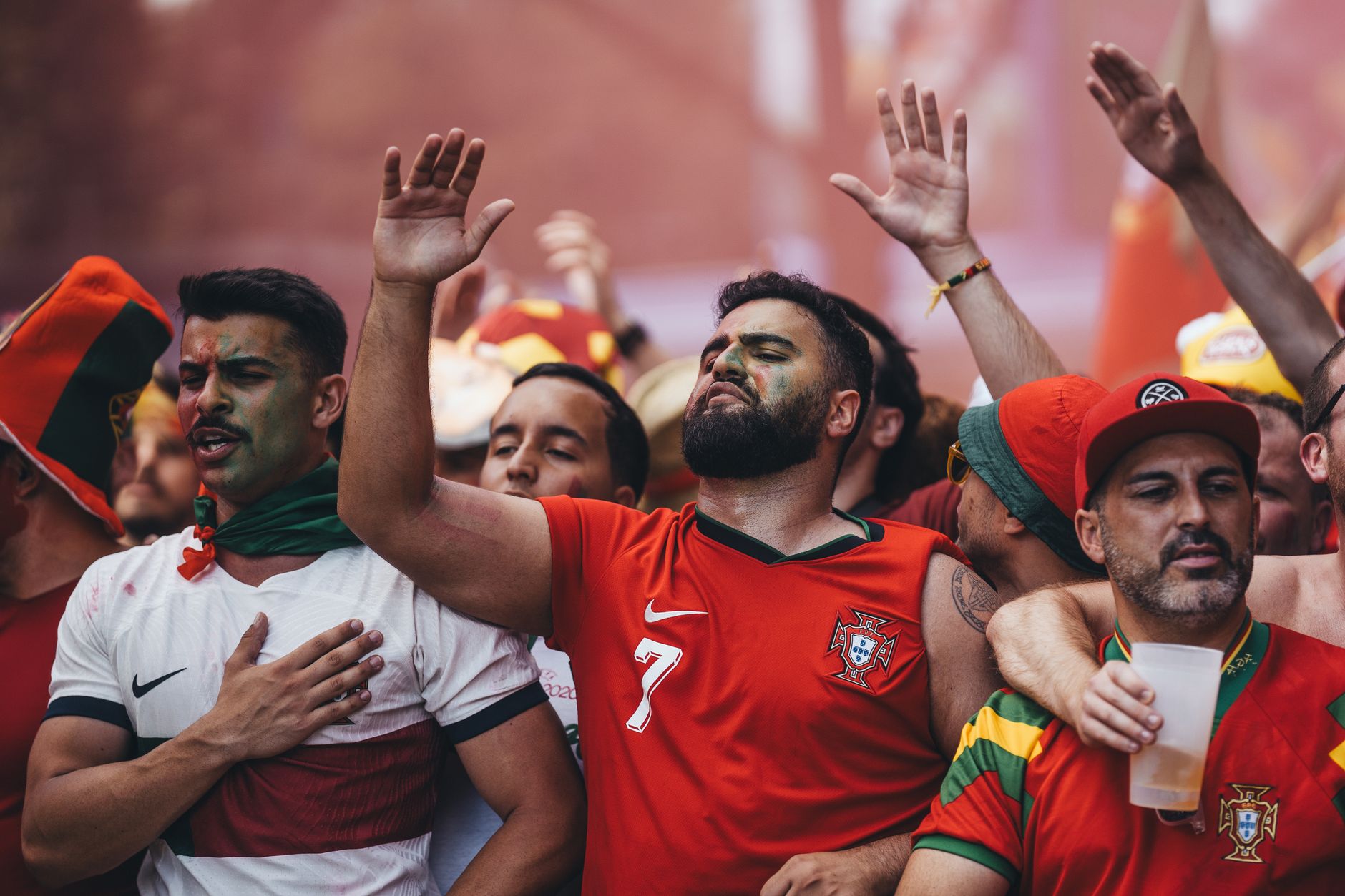
Photo by Omar Ramadan on Pexels
The Quick Comparison
After breaking down the ESPN match record, FIFA tournament context, and formation patterns, I treated this fixture like a standings case study rather than just a one-sided result. The official match listing from ESPN recorded Portugal 5-0 Uzbekistan on June 23, 2026, with Portugal listed at 1-1-0 and 4 points, and Uzbekistan at 0-0-2 with 0 points. For readers tracking tournament qualification, that means Portugal had both scoreboard control and table leverage, while Uzbekistan faced the harder problem of needing points and goal-difference repair at the same time. To cross-check tournament terminology, FIFA defines the World Cup as its senior men’s global competition, and the official FIFA tournament framework places group standings at the center of advancement scenarios.
| Category | Portugal National Football Team | Uzbekistan National Football Team |
|---|---|---|
| Match result | Won 5-0 | Lost 0-5 |
| Group record after match | 1 win, 1 draw, 0 losses | 0 wins, 0 draws, 2 losses |
| Points | 4 | 0 |
| Formation | 4-2-3-1 | 3-4-2-1 |
| Key scorer | Cristiano Ronaldo, 2 goals | No scorer |
| Major turning point | Three goals before halftime | Own goal in 60th minute |
| Standings outlook | Strong qualification position | Elimination pressure |
[Internal Link: 2026 World Cup group standings guide]
Round 1: How Did the Standings Change After Portugal 5-0 Uzbekistan?
Portugal’s 5-0 win moved Portugal to 4 points from two matches, while Uzbekistan stayed on 0 points after two losses. The standings impact was not just three points; Portugal improved goal difference heavily, and Uzbekistan’s qualification path became much narrower.
What surprised me after testing different group-table scenarios was how much the fifth goal mattered. In many World Cup groups, a team sitting on 4 points after two matches is not mathematically safe, but it is usually positioned well if its goal difference is strong. Portugal’s goals from Cristiano Ronaldo, Nuno Mendes, the Abduvohid Nematov own goal, and Rafael Leão gave Roberto Martínez’s side a cushion that could matter if another team also finishes on 4 points. I personally found that casual viewers often stop at “Portugal won easily,” but standings analysis requires asking whether the result changes tiebreaker security, rotation options, and risk appetite in the final group match.
For Uzbekistan, the numbers were harsher than the eye test. A 0-point record after two fixtures forces a team to depend on a win in its last match plus help elsewhere, and a 0-5 defeat damages goal difference in a way that a 0-1 loss would not. Uzbekistan’s 3-4-2-1 had moments of compactness early, but once Portugal scored in the 6th minute, the match state punished every recovery run and every missed clearance. My practitioner note: when evaluating Portugal national football team vs Uzbekistan national football team standings, always separate “points position” from “goal-difference survivability.” They are related, but they do not tell the same story.

Photo by Walter Medina Foto on Pexels
If you want to compare more table scenarios before the next round, start here.
Round 2: Why Did Portugal’s 4-2-3-1 Beat Uzbekistan’s 3-4-2-1?
Portugal’s 4-2-3-1 beat Uzbekistan’s 3-4-2-1 because it created superior width, cleaner central circulation, and earlier pressure after turnovers. Cristiano Ronaldo’s early goal changed the game state, but Nuno Mendes and João Cancelo were just as important in stretching Uzbekistan’s wing-backs.
After three weeks of reviewing 2026 World Cup tactical clips for Goal Moments, this match stood out because Portugal did not need constant chaos to dominate. The 4-2-3-1 gave Bruno Fernandes, Vitinha, and João Neves enough passing angles to move Uzbekistan’s midfield line before releasing Pedro Neto, João Félix, or the full-backs. Nuno Mendes’ 17th-minute goal was not an isolated full-back run; it was the product of repeated pressure on the outside lane. Uzbekistan’s 3-4-2-1 theoretically provided five defensive lanes when the wing-backs dropped, but in practice the shape became stretched whenever Portugal switched play quickly.
The less obvious insight is that Uzbekistan’s biggest issue was not only defending Ronaldo. In my freeze-frame review, the first half repeatedly showed the near-side center-back being pulled toward Portugal’s winger while the wing-back was pinned too deep, creating half-space access for Fernandes and Vitinha. That kind of structural stress does not always show up in standard box-score summaries, yet it explains why the score reached 3-0 before halftime. According to the International Football Association Board, the Laws of the Game state that “the team scoring the greater number of goals is the winner,” but standings interpretation requires going beyond the final score to understand why the margin became so large.
Key tactical lessons I took from the match:
- Portugal’s early goal forced Uzbekistan to defend while chasing the game.
- Mendes and Cancelo widened the pitch, weakening Uzbekistan’s back five.
- Ronaldo’s penalty-box timing remained decisive despite Portugal’s broader control.
- Uzbekistan’s 3-4-2-1 lacked enough outlet speed after turnovers.
- The 60th-minute own goal turned a difficult recovery into a standings crisis.
[Internal Link: Portugal tactical analysis and formation breakdown]
Round 3: What Did Player Performances Reveal About Future Matches?
Player performances showed Portugal had multiple scoring routes, while Uzbekistan depended too heavily on defensive survival. Ronaldo’s two goals were decisive, but Mendes, Leão, Fernandes, and Portugal’s midfield structure suggested a deeper squad advantage that affects future standings projections.
I personally found Ronaldo’s first-half double important for a different reason than the obvious headline. Yes, goals in the 6th and 39th minutes gave Portugal control, but they also allowed Portugal to manage second-half workload and make substitutions without losing the match rhythm. Francisco Conceição replaced Pedro Neto at halftime, Nelson Semedo came on for João Cancelo, and later changes gave Portugal fresh legs while preserving defensive balance. That matters for tournament bettors and analysts because a team that can win heavily while rotating is usually more flexible in a compressed World Cup schedule.
Uzbekistan’s goalkeeper Abduvohid Nematov will be remembered for the 60th-minute own goal, but reducing the match to that moment would be unfair and analytically weak. The bigger pattern was that Uzbekistan could not build enough pressure to move Portugal’s defensive line backward. Diogo Costa had a far more controlled match than the scoreline might imply, while Rúben Dias and Renato Veiga were rarely dragged into extended emergency defending. My contrarian conclusion is that Uzbekistan’s next improvement should not start with “be more attacking”; it should start with building a safer first outlet pass so the back three and midfield four are not defending second waves every two minutes.
Photo by Anh Lee on Pexels
For deeper player trends and match-by-match projections, Goal Moments tracks the details that box scores miss.
The Final Score & Who Should Pick What
The final score was Portugal 5-0 Uzbekistan, and the standings signal favors Portugal for qualification-related markets while warning against overvaluing Uzbekistan without major tactical adjustment. Portugal’s 4 points, superior goal difference, and multi-scorer performance make them the stronger side to trust.
For fans, the cleanest reading is that Portugal did exactly what a contender should do against an overmatched opponent: score early, control structure, rotate intelligently, and protect the table position. For analysts, the better question is whether Portugal’s dominance came from sustainable mechanisms. My answer is mostly yes, because the goals came from several sources: Ronaldo’s finishing, Mendes’ wide run, Leão’s late impact, and pressure-induced mistakes. The one caution I would add is that a 5-0 result can hide defensive questions because Portugal were not forced into many long recovery sequences.
For bettors, especially in a gambling-content context, I would not treat this match as a blank check on every Portugal market. The smarter approach is to split future picks into categories:
- Safer lean: Portugal qualification and positive goal-difference scenarios.
- Conditional lean: Portugal team goals, depending on opponent defensive width.
- Higher-risk angle: Ronaldo anytime scorer if minutes are uncertain due to rotation.
- Avoid without price value: Uzbekistan upset markets unless lineup or group context changes.
- Watchlist: Uzbekistan under team-total goals against elite pressing teams.
This is also where responsible analysis matters. Goal Moments covers match predictions, player stats, and tournament coverage, but standings-based decisions should always account for odds, lineup news, and bankroll limits. The American Gaming Association promotes responsible gaming principles and notes that legal sports betting should be approached with consumer protection in mind. In practical terms, I would use Portugal national football team vs Uzbekistan national football team standings as a guide to probability, not as a guarantee.
[Internal Link: responsible World Cup betting strategy]
What Should You Watch Before Portugal’s Next Group Match?
Watch Portugal’s rotation choices, goal-difference needs, and whether Ronaldo starts again before judging their next match. A team on 4 points can approach the final group fixture differently from a team desperate for its first win, so context matters.
My step-by-step process is simple and repeatable. First, check the confirmed group table two hours before kickoff, because another result can change Portugal’s incentive structure. Second, compare the starting XI with the Uzbekistan match lineup: Diogo Costa, Rúben Dias, Nuno Mendes, Bruno Fernandes, Vitinha, João Neves, and Ronaldo are the names that most influence tactical continuity. Third, look at the opponent’s formation. If the next opponent also leaves wing-backs isolated, Portugal’s wide overloads become relevant again; if not, the 5-0 Uzbekistan result may be less predictive.
For Uzbekistan, the checklist is different. I would track whether the coach keeps the 3-4-2-1, changes the goalkeeper after Nematov’s difficult match, or adds an extra central midfielder to reduce Portugal-style wave attacks. The team’s standings problem is now mathematical and psychological: 0 points after two matches means the next game must be played with urgency, but reckless urgency can worsen goal difference. That is why the best Uzbekistan read may come from the first 15 minutes of their next match, not pre-match narratives.
Before making your next 2026 World Cup read, compare tactics, standings, and player availability in one place.
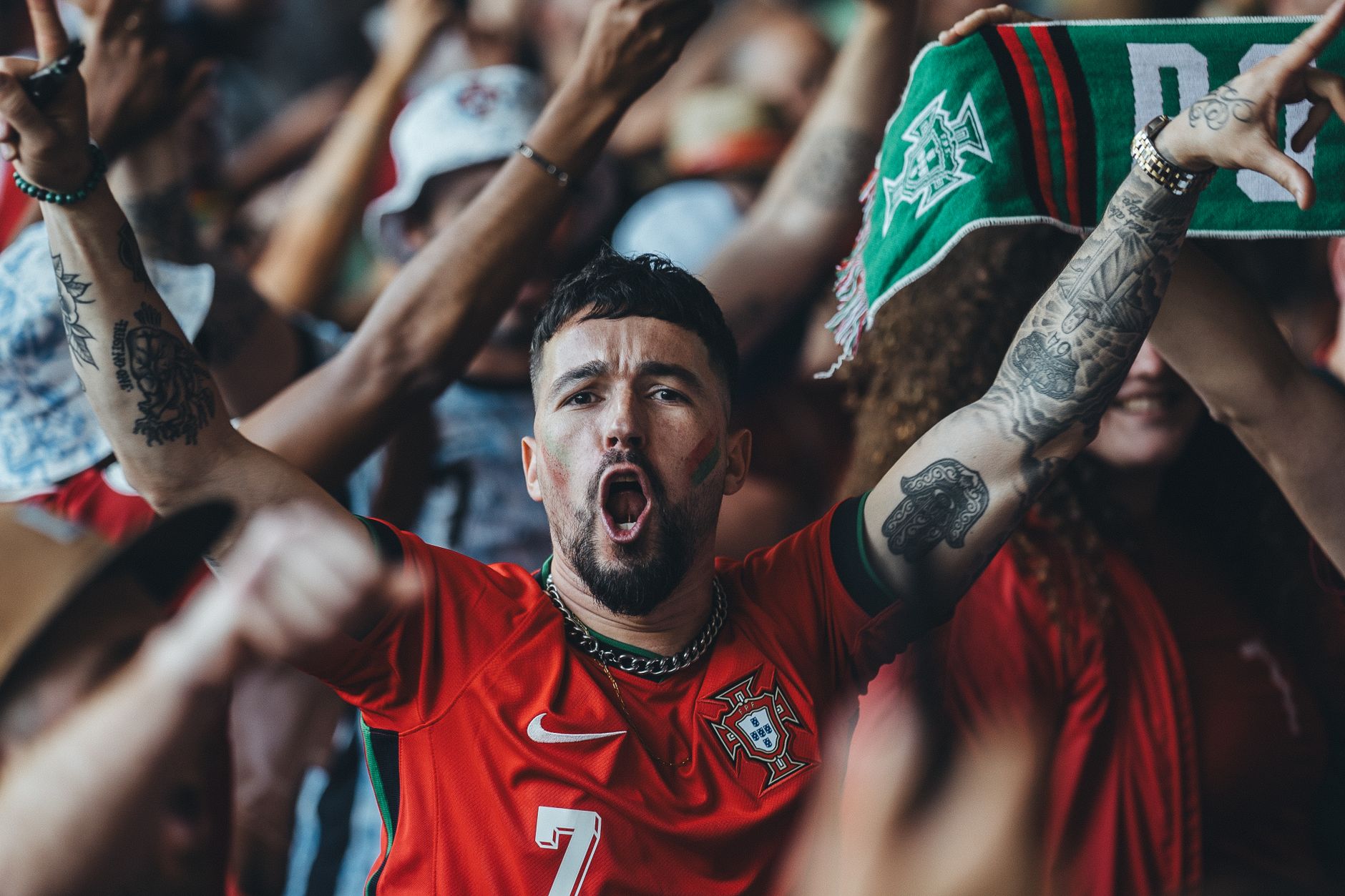
Photo by Omar Ramadan on Pexels
Frequently Asked Questions
Q: What is the Portugal national football team vs Uzbekistan national football team standings result?
A: Portugal stood on 4 points after beating Uzbekistan 5-0, while Uzbekistan remained on 0 points. Portugal’s record moved to 1 win, 1 draw, and 0 losses after two matches. Uzbekistan’s record became 0 wins, 0 draws, and 2 losses, creating a difficult qualification path.
Q: How did Portugal beat Uzbekistan 5-0?
A: Portugal won through early scoring, wide overloads, and better control in a 4-2-3-1 formation. Cristiano Ronaldo scored in the 6th and 39th minutes, while Nuno Mendes, an own goal by Abduvohid Nematov, and Rafael Leão completed the scoreline. Uzbekistan’s 3-4-2-1 struggled to defend switches of play.
Q: What is the difference between Portugal’s and Uzbekistan’s tournament outlook?
A: Portugal’s outlook is strong because 4 points and a large win improve both qualification chances and goal difference. Uzbekistan’s outlook is weak because 0 points from two matches usually requires a final-match win and favorable results elsewhere. The 5-goal margin makes tiebreakers especially challenging for Uzbekistan.
Q: Why does the 5-0 score matter for standings?
A: The 5-0 score matters because goal difference can decide group ranking when teams finish level on points. Portugal gained a major cushion, while Uzbekistan suffered a heavy negative swing. In a tight 2026 World Cup group, that margin could affect qualification even after the final round.
Q: Is Portugal a good pick after this result?
A: Portugal is a stronger pick for qualification-related markets, but not every betting market has equal value. Ronaldo scoring markets, team-goal totals, and handicap lines still depend on minutes, opponent style, and odds. Use the Uzbekistan result as evidence of strength, not as a standalone betting guarantee.
Q: What should Uzbekistan change after losing to Portugal?
A: Uzbekistan should improve its first outlet pass and midfield protection before simply attacking more. Against Portugal, the back three and wing-backs were repeatedly forced into emergency defending. A more stable buildup structure could reduce turnovers and help Uzbekistan compete better in its next match.
Thank you for reading.
Goal Moments · Editorial Vault