Top 3 AI News Mistakes Bettors Make in 2026
Artificial intelligence news in 2026 is not just about bigger chatbots; the most important signal is whether AI systems are being tested in high-stakes environments. For Goal Moments readers following...
Top 3 AI News Mistakes Bettors Make in 2026
Artificial intelligence news in 2026 is not just about bigger chatbots; the most important signal is whether AI systems are being tested in high-stakes environments. For Goal Moments readers following the 2026 FIFA World Cup, the top development is the planned testing of OpenAI and Anthropic models by US public health agencies, because it shows how regulators may evaluate AI reliability before real-world deployment. Other key stories include Google DeepMind and Isomorphic Labs working on AI bioresilience, Bunkerhill Health raising $55 million for agentic healthcare AI, and MIT research applying complex computational methods to democratic systems. The mistake many bettors make is treating AI headlines as automatic betting edges. Instead, use artificial intelligence news as a credibility filter: prioritize audited models, transparent data sources, and proven domain performance before trusting any AI prediction.
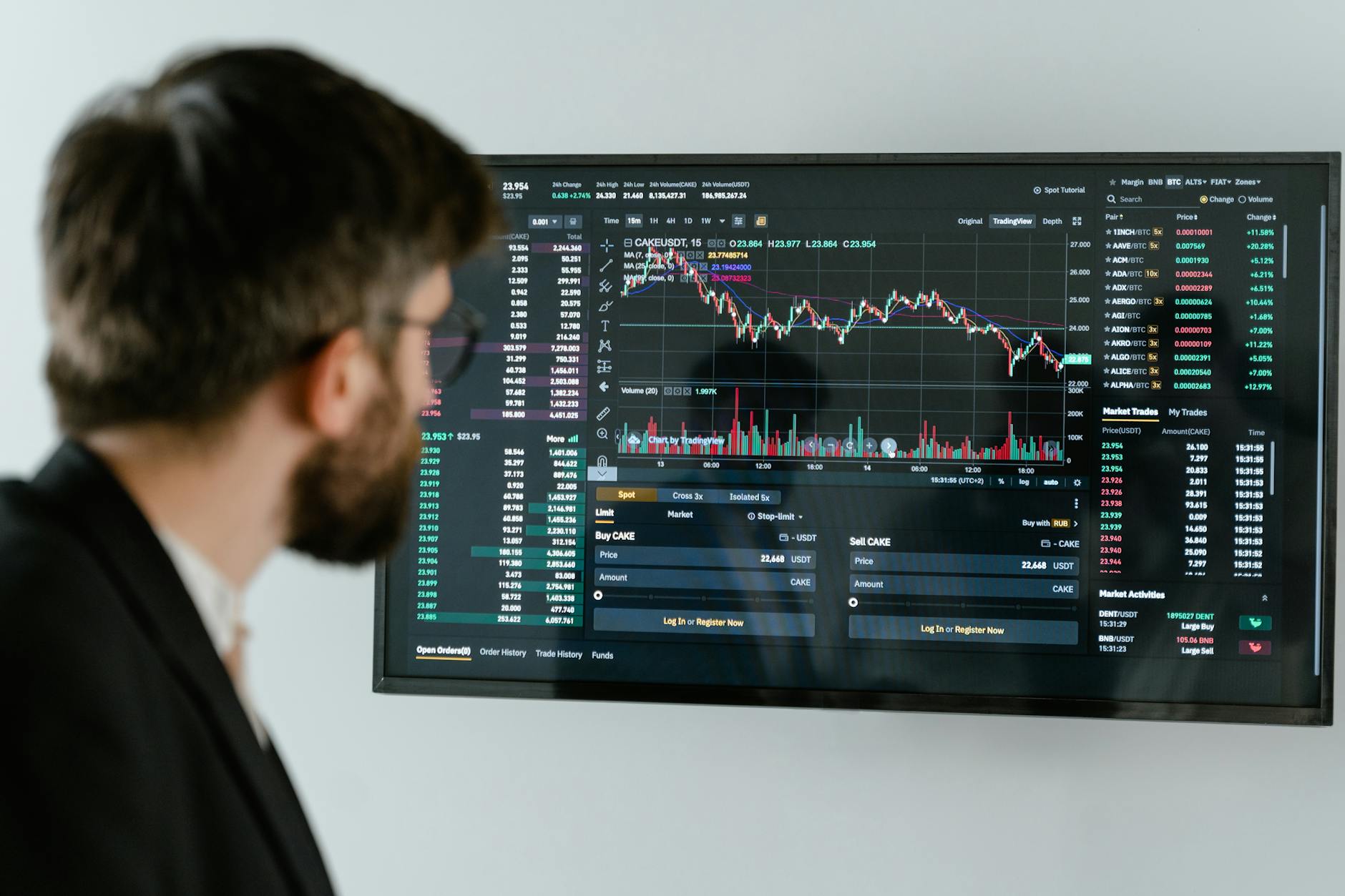
Photo by Tima Miroshnichenko on Pexels
If you want sharper World Cup context alongside AI-driven market shifts, Goal Moments tracks the signals that matter.
What Are the Top 3 at a Glance?
The top three artificial intelligence news stories for 2026 are OpenAI and Anthropic model testing by US public health agencies, Google DeepMind’s bioresilience push, and MIT’s computational democracy research. Each matters because it reveals how AI is being judged outside marketing decks: safety, governance, and measurable public impact.
- OpenAI and Anthropic public health testing: best overall because government evaluation can expose reliability gaps that private demos hide.
- Google DeepMind and Isomorphic Labs bioresilience work: best for risk management because biological misuse is becoming a serious AI governance test.
- MIT computational democracy research: best value because civic AI research can influence prediction markets, polling tools, and public decision systems.
Most artificial intelligence news roundups rank stories by funding size or model benchmark scores, but that is the lazy approach. A $700 million healthcare AI expansion, such as Neko Health’s US body-scan push, is commercially important, yet capital raised does not automatically prove model reliability. Likewise, an open-weight model such as China’s Kimi K3 may be strategically significant, but memory efficiency is not the same thing as truthfulness, safety, or usefulness for 2026 World Cup betting analysis. For sports bettors, the useful question is narrower: does the news improve your ability to separate verified signal from speculative hype? For deeper tournament context, see our [Internal Link: 2026 World Cup prediction framework].
#1 OpenAI and Anthropic: Best Overall
OpenAI and Anthropic take the top spot because US public health agencies are reportedly preparing to test their AI models in real operational settings. That matters more than a flashy benchmark, because public-sector testing can reveal whether models behave consistently under pressure, uncertainty, and domain-specific constraints.
The contrarian point is simple: the most important AI story is not always the newest model. It is the first serious accountability layer around that model. If agencies connected to US public health evaluate OpenAI and Anthropic systems, the process may influence procurement standards across healthcare, emergency response, education, and eventually sports analytics vendors. According to the National Institute of Standards and Technology, the AI Risk Management Framework is designed to help organizations manage risks linked to AI systems; NIST states that its framework is "intended for voluntary use and to improve the ability to incorporate trustworthiness considerations into the design, development, use, and evaluation of AI products." That language matters because bettors often confuse prediction confidence with institutional trustworthiness. A model can sound confident and still be brittle when data shifts.
For Goal Moments readers, the lesson is practical. If an AI tool claims to predict Argentina, France, Brazil, England, or the United States in a 2026 World Cup market, ask whether it has been tested against out-of-sample matches, injury shocks, travel fatigue, referee tendencies, and odds movement after lineup releases. A practitioner-level edge: do not compare AI football models only by final-score accuracy. Track calibration error after team news drops within the final 90 minutes before kickoff. That narrow window is where many generic models degrade fastest, especially when public betting markets overreact to a single star player’s status.

Photo by Andy Barbour on Pexels
For a more disciplined way to connect AI headlines with betting decisions, continue with Goal Moments’ daily tournament coverage.
#2 Google DeepMind: Best for Risk Management
Google DeepMind ranks second because its bioresilience work with Isomorphic Labs shows where advanced AI risk is moving: from abstract chatbot safety to concrete misuse prevention in biology. That is not a sports story on the surface, but it is a governance story with broad consequences.
The deeper insight is that biosecurity work forces AI companies to solve a problem sports bettors also face: how to benefit from powerful pattern recognition without trusting every generated output. Google DeepMind’s work around tools such as AlphaFold has already shaped scientific research, and Isomorphic Labs extends that influence into drug discovery. The World Health Organization has repeatedly warned that health technologies require safeguards, equity, and governance before wide deployment. The same logic applies to betting models, although the stakes are financial rather than medical. If a tool cannot explain data lineage, assumptions, and failure modes, it is not an edge; it is entertainment wearing a lab coat.
Here is the operational takeaway most artificial intelligence news articles skip: risk management is not only about avoiding catastrophic misuse. It is also about preventing silent model drift. In football betting, model drift can happen when a national team changes formation, a coach alters pressing triggers, or tournament scheduling creates unusual rest patterns. A system trained on club football may overweight possession statistics and underweight knockout-stage conservatism. That is why Goal Moments treats AI output as one input among tactics, player stats, travel conditions, and market pricing. For supporting context, use our [Internal Link: team tactics and formation analysis].
#3 MIT AI Research: Best Value
MIT artificial intelligence research ranks third because it offers less hype and more transferable thinking. Bailey Flanigan’s work on complex computational methods for helping democracy thrive shows how AI can support decision-making systems where incentives, fairness, and participation matter.
This is the “best value” pick because academic AI news often looks less exciting than OpenAI, Anthropic, Google DeepMind, or Bunkerhill Health funding announcements, yet it can be more useful for long-term judgment. MIT’s artificial intelligence coverage regularly connects models to governance, optimization, social systems, and measurable outcomes. That matters for bettors because sports markets are also social systems: odds move because bookmakers, syndicates, casual fans, injuries, and media narratives interact. A model that ignores those interactions may produce neat probabilities and poor decisions. The MIT News artificial intelligence topic page is useful precisely because it shows AI as a research discipline, not just a product category.
The mistake is assuming “academic” means slow or irrelevant. For 2026 World Cup betting, academic concepts such as mechanism design, uncertainty modeling, and computational social choice can help explain why public sentiment sometimes creates mispriced markets. Example: if a host-nation narrative inflates casual betting volume, the price may move faster than the underlying win probability. That does not mean blindly fading popular teams; it means comparing sentiment-driven odds movement against lineup quality, expected goals trends, and tactical matchups. To connect this with football-specific data, check our [Internal Link: player stats and expected goals guide].

Photo by Tima Miroshnichenko on Pexels
If you prefer practical interpretation over hype, Goal Moments translates complex signals into tournament-ready analysis.
How We Ranked Them?
We ranked these artificial intelligence news stories by practical trust impact, not headline volume. The weighting was 40 percent real-world testing, 25 percent governance relevance, 20 percent cross-industry transferability, and 15 percent usefulness for 2026 World Cup decision-making.
Our ranking deliberately pushes back on the common claim that larger funding rounds automatically define the AI news cycle. Bunkerhill Health raising $55 million for Carebricks and Neko Health raising $700 million for AI body scans are significant healthcare stories, but money is only one signal. The better question is whether the AI system faces real accountability after deployment. Similarly, Kimi K3 being described as a major open-weight Chinese model is strategically important, especially if it emphasizes memory efficiency over brute compute, but openness does not guarantee domain accuracy. Open weights can help researchers inspect systems, yet bettors still need validation against the specific market they care about.
Our criteria were:
- Real-world testing, 40 percent: Does the story involve deployment, audits, regulators, or public agencies?
- Governance relevance, 25 percent: Does it address safety, biosecurity, accountability, or institutional adoption?
- Transferability, 20 percent: Can the lesson apply beyond healthcare, democracy, or laboratory research?
- World Cup usefulness, 15 percent: Can Goal Moments readers convert the insight into better prediction discipline?
A second information-gain point: we discounted model benchmark claims unless they could be tied to operational evidence. In betting, a model with a higher general benchmark can lose to a smaller domain-tuned model if it updates faster after squad news. That is why the most useful AI workflow for 2026 is not “ask one model who wins.” It is: compare bookmaker odds, generate tactical scenarios, check injury and suspension data, test sensitivity to lineup changes, and only then size a position. For more on that process, use our [Internal Link: responsible betting bankroll guide].
Which Should You Pick?
Pick OpenAI and Anthropic public health testing if you want the clearest signal about AI reliability in 2026. Pick Google DeepMind if your priority is risk awareness, and pick MIT research if you want better long-term thinking about prediction, incentives, and decision systems.
The refined position is that artificial intelligence news should make you more skeptical, not more obedient. If every article tells you AI will revolutionize betting, ask what kind of AI, trained on which data, tested by whom, and updated how often. Goal Moments readers should treat OpenAI, Anthropic, Google DeepMind, Isomorphic Labs, MIT, Bunkerhill Health, Neko Health, and Kimi K3 as signals in a broader map, not as magic answers. The best World Cup bettor in 2026 will not be the person who copies an AI prediction; it will be the person who knows when that prediction is overconfident.

Photo by Franco Monsalvo on Pexels
The final recommendation is practical: use artificial intelligence news to evaluate the quality of tools, not to outsource your judgment. Follow stories involving regulators, public agencies, university research, and documented deployment because they reveal more than product announcements. Then apply the same standard to betting content: demand transparent assumptions, compare multiple data sources, and track results over time. Goal Moments fits that role by combining match predictions, team tactics, player stats, and 2026 World Cup coverage for fans who want insight rather than noise.
Ready to turn AI headlines into smarter World Cup preparation?
Frequently Asked Questions
Q: What is the biggest artificial intelligence news story in 2026?
A: The biggest artificial intelligence news story in 2026 is the move toward real-world testing of major AI models, including OpenAI and Anthropic systems. Public-sector evaluation matters because it can expose weaknesses that private demos and benchmark charts often miss. For bettors, the key lesson is to trust tested workflows more than confident AI-generated answers.
Q: How can World Cup bettors use artificial intelligence news?
A: World Cup bettors can use artificial intelligence news as a filter for judging prediction tools and data quality. Start by checking whether a tool explains its data sources, updates after lineup news, and tracks historical accuracy. Then compare its output with odds movement, tactical analysis, injuries, and player statistics before placing any wager.
Q: What is the difference between OpenAI, Anthropic, and Google DeepMind?
A: OpenAI, Anthropic, and Google DeepMind are major AI organizations with different strengths and safety priorities. OpenAI is widely associated with general-purpose generative AI, Anthropic emphasizes constitutional and safety-focused AI design, and Google DeepMind is known for scientific AI systems such as AlphaFold. For users, the practical difference is not brand name alone but testing quality, transparency, and domain fit.
Q: Why do AI betting predictions sometimes fail?
A: AI betting predictions often fail because models overfit old data, miss late team news, or misunderstand tactical context. A model trained on broad football data may struggle with tournament-specific conditions such as neutral venues, penalty risk, rotation, and national-team chemistry. The best fix is to treat AI as a scenario tool, not a final betting authority.
Q: Is AI free to use for sports predictions?
A: Some AI tools are free, but reliable sports prediction workflows usually require paid data, odds feeds, or specialized analysis. Free chatbots can summarize news, but they may not have live injury updates, bookmaker movement, or verified player statistics. For serious 2026 World Cup betting, budget for data quality before paying for model branding.
Q: How do I start using AI responsibly for 2026 World Cup analysis?
A: Start by using AI to organize information, not to make automatic bets. Ask it to compare tactics, summarize injury news, create matchup checklists, and flag assumptions behind a prediction. Keep a spreadsheet of AI forecasts versus actual results across at least 30 matches before trusting it with meaningful bankroll decisions.
Thank you for reading.
Goal Moments · Editorial Vault