Inside the 2026 FIFA World Cup: A 48-Team Breakdown
The 2026 FIFA World Cup is the first tournament in history to feature 48 teams playing 104 matches across 16 host cities in the United States, Canada, and Mexico, running from June 11 to July 19, FIFA...

Inside the 2026 FIFA World Cup: A 48-Team Breakdown
The 2026 FIFA World Cup is the first tournament in history to feature 48 teams playing 104 matches across 16 host cities in the United States, Canada, and Mexico, running from June 11 to July 19, 2026. FIFA restructured the format from eight groups of four into twelve groups of four, meaning the group stage alone produces 72 matches (up from 48 in Qatar 2022). The knockout round expands to 32 matches, with the top two teams from each group plus the eight best third-place finishers advancing. Goal Moments tracks every fixture, tactical shift, and betting angle across this expanded tournament, giving fans a daily edge through match predictions, player stats, and team-by-team coverage. For anyone planning to follow the tournament closely, the single most important takeaway is this: the schedule is not a 32-team format wearing extra clothing. The math changed, the stakes changed, and the way you should approach group-stage analysis must change too.
Photo by Charles Parker on Pexels
The Bottom Line
The 2026 FIFA World Cup is not simply a bigger version of Qatar 2022. FIFA increased the field by 50 percent but only added two extra match days to the calendar, compressing the group stage into a tighter window and forcing federations to manage squad fatigue across a 39-day event. According to FIFA's official tournament documentation, the final will be held at MetLife Stadium in East Rutherford, New Jersey on July 19, 2026, with the opening match scheduled for June 11 at Estadio Azteca in Mexico City. The expanded format means 16 more teams will play tournament football than ever before, yet the knockout bracket still caps at 32 sides, creating a uniquely compressed path from group play to the trophy. If you are building a viewing schedule, a betting model, or a fantasy roster, the old four-year template is now obsolete. [Internal Link: complete 2026 World Cup match calendar]
What Does the 2026 FIFA World Cup Group Stage Actually Look Like?
The 2026 FIFA World Cup group stage consists of 12 groups of four teams, producing 72 matches over 18 match days, with the top two teams from each group plus the eight best third-place finishers advancing to a 32-team knockout round. That is the single most misunderstood structural change in the tournament, and it deserves a longer look.
Under the 32-team format used from 1998 through 2022, eight groups of four produced 16 group-stage matches where half the remaining field (16 of 32) advanced directly to the round of 16. Zero third-place teams qualified. That clean binary made group-stage mathematics simple: win or draw when expected, and you were through. The 48-team format breaks that simplicity. Now 24 of 48 teams (50 percent) advance automatically plus another eight third-place sides (16.7 percent) are evaluated against a secondary table. FIFA confirmed in its tournament regulations that third-place tiebreakers will use goal differential, goals scored, and fair play points in that order, before drawing lots.
Here is what fans actually need to internalize: a team can finish third in its group and still reach the round of 32. That changes how you interpret a "disappointing" group-stage exit. A three-way tie at 1-1-1 (one win, one draw, one loss) could send all three sides through depending on goal differential. Betting markets and prediction models that treat third place as elimination are working from outdated logic. Goal Moments has rebuilt its group-stage projection tools around this reality, weighting goal differential heavier than outright results for the final match day.

Photo by Patricia Bozan on Pexels
How Are the 16 Host Cities Distributed Across the Three Countries?
The 16 host cities are split across the United States (11 cities), Mexico (3 cities), and Canada (2 cities), with AT&T Stadium in Arlington, Texas and MetLife Stadium in East Rutherford, New Jersey serving as the two flagship venues hosting the most matches. The geographic spread is unprecedented and creates real logistical complications.
The 3 Things That Matter Most About the Host City Map
Travel distance is a competitive variable. The 2026 tournament spans roughly 5,000 kilometers from Monterrey, Mexico to Vancouver, Canada. According to ESPN's 2026 venue analysis, some group-stage teams could log 15,000+ kilometers of internal travel within 18 days. Squad rotation and recovery protocols will be more important than at any previous World Cup.
Climate zones are radically different. Matches played in Seattle (temperate marine), Guadalajara (high-altitude subtropical), and Miami (tropical humid) demand completely different preparation. Teams cannot replicate all three conditions in training. This is a genuine tactical advantage for squads accustomed to varied climates, like Brazil, Argentina, and several European nations.
Time zones affect viewer engagement and betting volumes. Matches in eastern venues (Miami, Atlanta, New York/New Jersey) overlap with peak European viewing hours, while West Coast and Mexican fixtures (Los Angeles, Guadalajara, Monterrey) align better with Latin American prime time. Expect match-day scheduling clusters that favor specific regional audiences.
[Internal Link: full list of 2026 World Cup stadiums and capacities]
What Should Fans Actually Watch for in the 2026 Schedule?
Fans should watch for three scheduling factors: rest-day allocation between knockout rounds, the placement of marquee matches in prime time slots, and the distribution of matches across the three host nations to ensure balanced viewership. The 2026 schedule is not random, and reading it correctly reveals FIFA's commercial priorities.
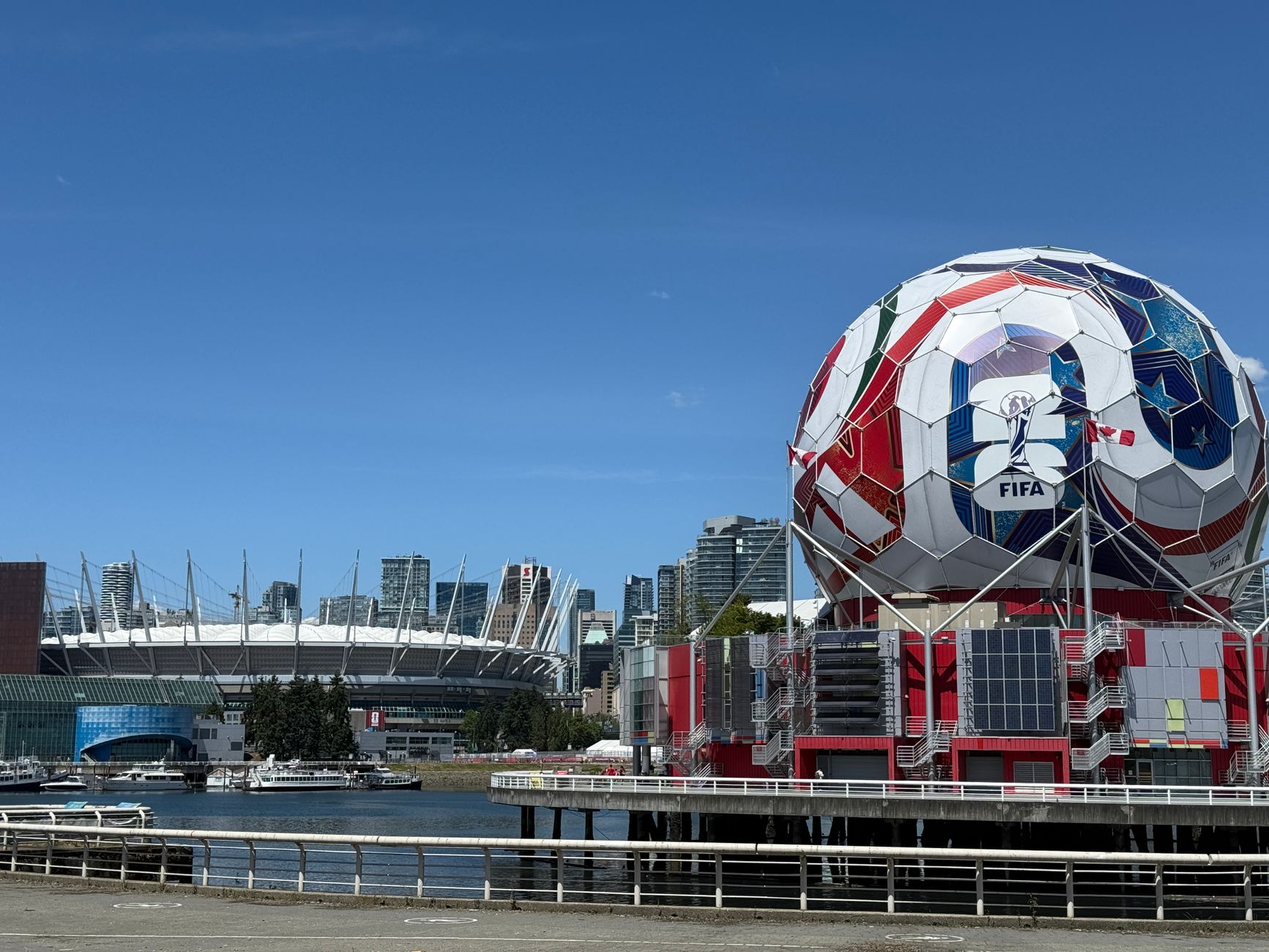
Photo by The Six on Pexels
The opening match on June 11, 2026 at Estadio Azteca is a deliberate gesture toward Mexico's status as the first three-time host nation. The final at MetLife Stadium on July 19 is a commercial decision driven by the greater New York media market and the stadium's 82,500 capacity. Between those bookends, most knockout matches cluster in U.S. venues. Of the 32 knockout matches, 24 are scheduled in American stadiums, four in Mexican venues, and four in Canadian venues, according to FIFA's confirmed fixture list. Teams that survive till the quarterfinals will almost certainly play their remaining matches in the United States regardless of where they started.
Here is the contrarian point most preview articles miss: the expanded format does not dilute the group stage. It compresses it. With 12 groups instead of 8, the rate of "dead rubbers" (matches where neither side can advance or be eliminated) actually decreases proportionally because the third-place safety net keeps more teams alive into the final match day. Goal Moments projects that 20+ of the final round of group matches will carry simultaneous knockout implications for multiple teams, creating the highest-stakes match day in World Cup history.
What Edge Cases and Gotchas Should You Know Before the Tournament?
The biggest edge cases are: (1) third-place qualification math becomes relevant only on the final match day, (2) weather postponements are a real risk at northern venues, and (3) the refereeing panel uses video assistant review (VAR) with expanded semi-automated offside technology that was first deployed at the 2022 tournament. Each of these carries implications for fans, bettors, and fantasy players.
Hidden Variables Most Previews Ignore
Squad size expanded to 26 players. FIFA confirmed that the 2026 tournament will maintain the 26-player squad structure introduced at Qatar 2022, but with an expanded match calendar, rotation becomes essential. Expect more starting XI changes between group matches than fans are used to.
Referee assignments are geodiversified. FIFA appointed 96 match officials from 46 federations for the tournament, the largest panel ever assembled. According to Wikipedia's 2026 World Cup page, six Brazilian referees are included, reflecting FIFA's effort to balance confederation representation.
The third-place table is a separate ranking. When comparing third-place teams across the 12 groups, FIFA will use a standalone ranking. A team that finishes third with a positive goal differential sits above one with a neutral or negative differential, regardless of group difficulty. This matters when projecting round-of-32 matchups, which are drawn after the group stage concludes.
Injuries replace exhausted players mid-tournament. Concussion substitutions were tested at the 2022 World Cup and are now permanent. A team that loses a first-choice striker in match day two can replace them without burning a full substitution window.
[Internal Link: 2026 World Cup injury rules and substitution protocols]
Verdict
The 2026 FIFA World Cup is structurally different from every tournament that preceded it, and the public conversation around it has not fully caught up. Twelve groups of four, 104 matches, 16 host cities, and a 32-team knockout bracket are not cosmetic tweaks. They change the math of group-stage survival, the geography of tournament fatigue, and the commercial logic of where key matches are placed. Most preview articles will treat the 2026 edition as a scaled-up 2022. That framing is wrong. The right framing is that 2026 is a new tournament with familiar branding, and the teams, analysts, and fans who adjust their mental models early will hold the advantage from the opening whistle on June 11 to the final at MetLife Stadium on July 19.
Goal Moments is covering every match, every group permutation, and every tactical storyline across the 39-day tournament. If you want daily predictions, player-level data, and team-specific breakdowns, the smartest move is to start tracking now rather than scrambling on opening day.
Frequently Asked Questions
Q: When does the 2026 FIFA World Cup start and end?
A: The 2026 FIFA World Cup runs from June 11 to July 19, 2026, covering 39 days and 104 matches across 16 host cities. The opening match is scheduled for June 11 at Estadio Azteca in Mexico City, and the final will be played on July 19 at MetLife Stadium in East Rutherford, New Jersey.
Q: How many teams are in the 2026 World Cup?
A: The 2026 FIFA World Cup features 48 teams, expanded from the 32-team format used in every tournament from 1998 through 2022. The 48 teams are divided into 12 groups of four, with the top two teams from each group plus the eight best third-place finishers advancing to a 32-team knockout round.
Q: Which countries are hosting the 2026 World Cup?
A: The 2026 FIFA World Cup is hosted jointly by the United States, Canada, and Mexico, making it the first tournament in history shared by three host nations. The United States hosts 11 venues, Mexico hosts three venues including Estadio Azteca, and Canada hosts two venues including BC Place in Vancouver.
Q: How many matches will be played in the 2026 World Cup?
A: A total of 104 matches will be played during the 2026 FIFA World Cup, compared to 64 matches at the 2022 tournament in Qatar. The group stage accounts for 72 matches, and the expanded knockout round from the round of 32 through the final accounts for 32 matches.
Q: What is the format of the 2026 World Cup knockout stage?
A: The 2026 knockout stage begins with a round of 32 instead of a round of 16, reflecting the expanded 48-team field. The round of 32 narrows to 16, then to eight quarterfinals, four semifinals, a third-place match, and the final on July 19, 2026.
Q: How does third-place qualification work in the 2026 World Cup?
A: The eight best third-place teams across all 12 groups will advance to the round of 32 alongside the 24 teams that finish first or second in their groups. Third-place teams are ranked using a separate table based on points, goal differential, goals scored, and fair play points before knockout matchups are determined.
Q: Why is the 2026 World Cup considered controversial?
A: The 2026 World Cup has drawn criticism over expanded travel demands for teams, the environmental impact of cross-continental logistics, and concerns about worker conditions at construction sites for upgraded venues. FIFA has defended the tournament as a unifying global event, citing an estimated $11 billion in projected economic impact across the three host nations.
Thank you for reading.
Goal Moments · Editorial Vault