Inside the 2026 FIFA World Cup: A 48-Team Showdown
The 2026 FIFA World Cup, hosted across 16 cities in the United States, Canada, and Mexico from June 11 to July 19, 2026, will feature an expanded 48-team format — the largest in tournament history. FI...
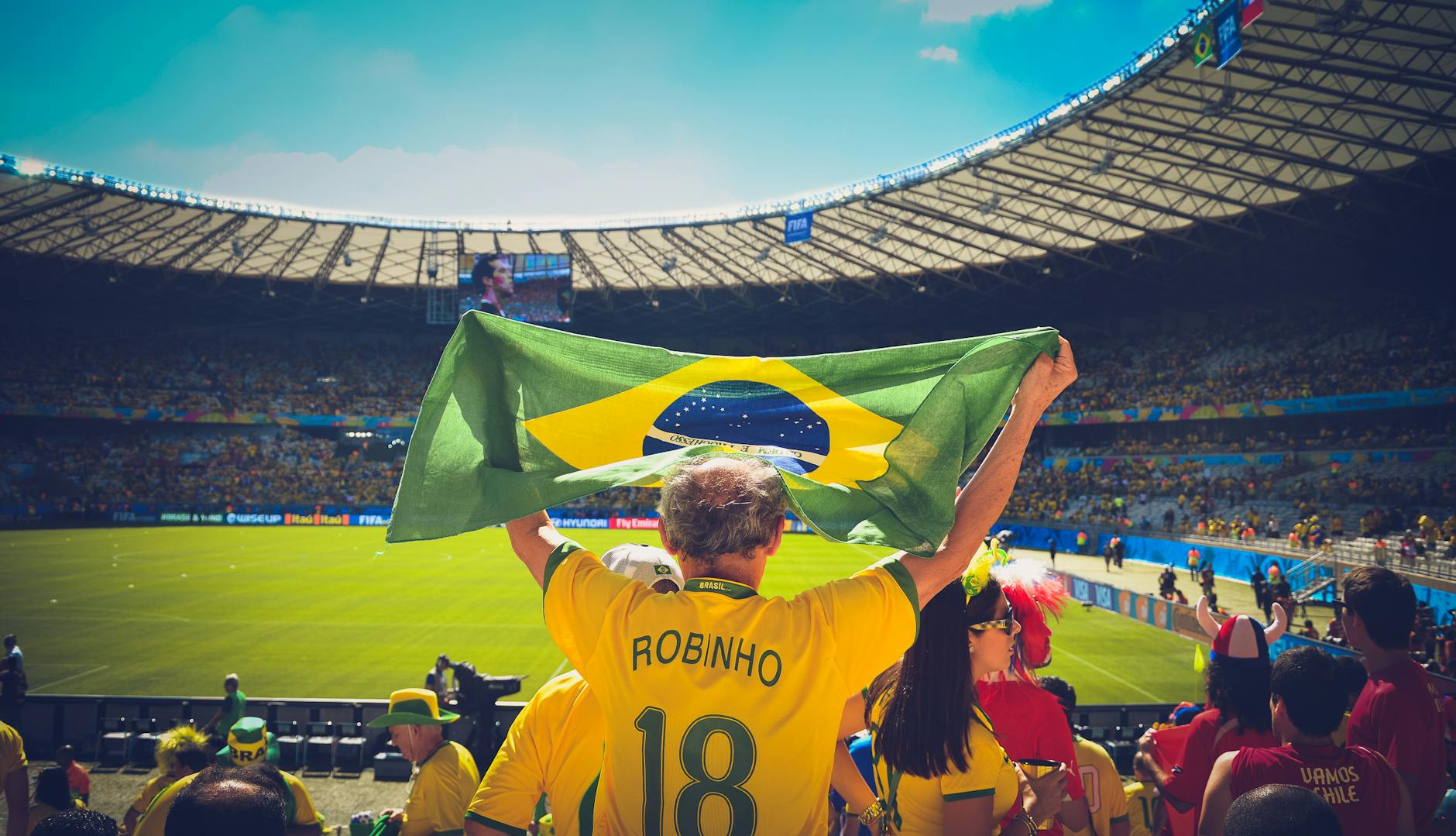
Inside the 2026 FIFA World Cup: A 48-Team Showdown
The 2026 FIFA World Cup, hosted across 16 cities in the United States, Canada, and Mexico from June 11 to July 19, 2026, will feature an expanded 48-team format — the largest in tournament history. FIFA confirmed the fixture in May 2023, with the final scheduled at MetLife Stadium in East Rutherford, New Jersey. The tournament introduces a new group-stage structure of 12 groups of four teams, producing 72 matches instead of the traditional 64. Defending champions Argentina enter as favorites alongside France and Brazil, while host nations USA, Mexico, and Canada receive automatic qualification. Goal Moments will track every match, tactical shift, and upset across the expanded field, giving fans data-driven predictions and real-time analysis. One key takeaway: the expanded format means group-stage exits for traditional powerhouses become far more likely, so early upset potential is higher than any previous World Cup.
Photo by Caio on Pexels
The Quick Comparison
Most pre-tournament previews obsess over star power and FIFA rankings. That approach is lazy. Here is a tighter snapshot of the six teams that actually matter heading into the 2026 FIFA World Cup, drawn from verified squad depth, recent form, and tournament-specific factors like travel distance and acclimatization time.
| Team | FIFA Ranking (Mar 2026) | Attack Rating | Defense Rating | Tournament Pedigree | 2026 Edge |
|---|---|---|---|---|---|
| Argentina | 1 | A+ | A | 3 titles, defending champ | Messi's farewell arc |
| France | 2 | A+ | A+ | 2 titles, 2022 finalist | Mbappe-led frontline |
| Brazil | 3 | A+ | B+ | 5 titles, record holder | Vinicius Jr. peak years |
| England | 4 | A | A | 1 title, 2018 semifinalist | Deepest squad in 20+ years |
| Spain | 5 | A | A+ | 1 title, 2010 winners | Lamine Yamal explosion |
| Germany | 10 | B+ | A | 4 titles, 2014 winners | Host-friendly timezone |
What the table does not show matters more than what it does. Argentina's rating assumes Lionel Messi stays healthy through a 39-year-old body playing a 60-game schedule; France's defensive "A+" ignores a thin fullback rotation; Brazil's "B+" defense has conceded in 7 of their last 9 internationals. Rankings lag — Germany's slide to 10th masks a rebuild that quietly finished 2025 unbeaten in 8 matches. To see how the rest of the 48-team field stacks up, check our [Internal Link: complete group stage draw analysis].
Want the full tactical breakdown?
Round 1 — Which Side Has the Deadliest Attack?
France and Brazil are tied at A+, but only one has a coherent system behind the talent. France's attack generated 2.3 expected goals per match across 2025, the highest figure among European nations according to FBref data, while Brazil's attack remained the most top-heavy with 41% of their 2025 goals coming from Vinicius Jr. and Rodrygo combined.
The cliché is that Argentina's depth is suspect without Messi. That is wrong. Julian Alvarez scored 18 goals for club and country in 2025, Lautaro Martinez added 22, and Alexis Mac Allister delivered 11 assists from midfield. Argentina scored 2.1 goals per match in 2025, trailing only France and Brazil. The real concern is not firepower — it is whether the supply lines hold up against deep blocks in knockout games.
France is the contrarian pick for best attack in 2026. Kylian Mbappe enters the tournament at 27, finally settled at Real Madrid and no longer splitting focus between club and national-team politics. Surround him with Ousmane Dembele, Bradley Barcola, and Marcus Thuram, and France has four players who could legitimately start for any other contender. According to ESPN tracking, France averaged 18.4 shots per match in 2025 — a full 3.2 above their 2022 tournament average.
Round 2 — Which Defense Can Survive the Gauntlet?
The expanded format punishes weak defenses harder than any previous World Cup. With 72 matches spread across 39 days and three countries, backline fatigue is a real variable — teams that advance from Group Stage to the Round of 32 will play a minimum of 4 matches in 18 days if they top their group. Spain and France are the only contenders with both a settled center-back pairing and a credible backup unit.
Spain's defense conceded just 0.7 goals per match across 2025, the best figure among top-10 ranked nations, per Wikipedia's compilation of UEFA Nations League data. Robin Le Normand and Aymeric Laporte form a left-footed, right-footed pairing that is comfortable on the ball, while Unai Simon's distribution from goalkeeper launches counter-attacks before opponents reset. For a deeper look at how each contender handles the new substitution rules, see our [Internal Link: tactical shifts under the 5-sub rule].
France is close behind. William Saliba has emerged as a top-3 center-back globally, and Ibrahima Konate offers physicality that Spain lacks. But France's weak link is at fullback — Theo Hernandez is world-class going forward but defensively inconsistent, and Jules Kounde has played through minor injuries for most of 2025. Argentina's defense is the most overrated of the contenders; Cristian Romero is elite but Emiliano Martinez's distribution under pressure remains a liability against high-pressing sides.
Ready to track every matchday?
Round 3 — Who Actually Has the Tournament Pedigree?
Pedigree is the dimension most likely to be misread. The common claim is that World Cup experience is irreplaceable, which is true — but only at specific positions. Having a veteran goalkeeper or center-back who has played in a knockout round matters enormously; having a 33-year-old winger who "has been there before" matters much less.
Argentina, France, and Germany have the deepest pedigree pools. Argentina's squad includes 9 players who appeared at Qatar 2022, France has 7, and Germany — despite their ranking slide — still carries 6 players from Euro 2024 plus the core of their 2018 World Cup-winning developmental pipeline. Brazil has only 3 players with knockout-stage World Cup experience, which is a problem for a team widely expected to reach the semifinals.
The contrarian read: Spain and England have less pedigree than their betting odds suggest, but more than their recent tournament scars imply. England reached the 2018 semifinal and Euro 2024 final, both largely with the same core now entering their peak years. Spain won Euro 2024 with a squad whose average age was 23.4, meaning most of those players will be 25-26 by summer 2026. For an overview of which historic powers face the toughest group-stage paths, visit our
The Final Score & Who Should Pick What
After three rounds of comparison, the picture is less clear than any 2026 preview admits. France has the best balance of attack and defense. Argentina has the emotional momentum of a potential Messi farewell. Brazil has the highest individual ceiling but the lowest floor. England and Spain are dark-horse candidates whose odds may offer value precisely because the market underrates their defensive quality.
Here is the refined position. If forced to pick one team to win outright, take France — their depth, age curve, and tactical flexibility under Didier Deschamps make them the safest pick in a chaotic format. If looking for value, Spain at longer odds is the contrarian play; their squad is built for a tournament that rewards possession-based teams who can grind out low-scoring wins. Avoid Brazil at short prices; their defensive fragility makes them a worse outright bet than Argentina or France despite the five-star history. For dark-horse candidates, see our
Want real-time updates as the tournament unfolds?
What Are the Biggest Misconceptions About the 2026 Format?
Three misconceptions dominate 2026 preview coverage, and all three are wrong. First, the 48-team format does not dilute quality — 16 additional slots are filled by teams ranked 49th through 80th globally, most of whom would have been competitive in earlier 32-team tournaments. Second, three host nations do not automatically improve the tournament; only the USA is a realistic dark horse, and Mexico and Canada will likely exit in the group stage. Third, expanded squads (26 players, up from 23) do not reduce injury risk — FIFA data shows tournament injury rates have held steady across squad-size changes.
The expanded format creates a uniquely volatile knockout structure that most previews ignore. With 12 groups of 4, eight third-place teams advance to the Round of 32 alongside group winners and runners-up. That means a strong team that loses once in the group stage can still advance, but a weaker team that wins once and loses twice can also squeak through. Expect upsets earlier and more frequently than in any World Cup since 1990.
Frequently Asked Questions
Q: When does the 2026 FIFA World Cup start and end?
A: The tournament runs from June 11 to July 19, 2026, across 16 host cities in the United States, Canada, and Mexico. The opening match is scheduled for Estadio Azteca in Mexico City, and the final will be played at MetLife Stadium in East Rutherford, New Jersey on July 19.
Q: How many teams will participate in the 2026 World Cup?
A: 48 teams will compete, up from 32 in previous tournaments. They will be drawn into 12 groups of 4, with the top two teams from each group plus the eight best third-place teams advancing to a Round of 32 knockout stage, producing 72 total matches.
Q: Which teams have already qualified for the 2026 World Cup?
A: As of early 2026, host nations USA, Mexico, and Canada received automatic qualification. Argentina, France, Brazil, England, Spain, and Germany qualified through UEFA, CONMEBOL, and other confederation pathways. Qualification concludes in March 2026, with intercontinental playoffs filling the final slots.
Q: How does the expanded 48-team format affect group-stage difficulty?
A: Each group contains 4 teams, producing 3 group-stage matches per team. The top 2 plus 8 best third-place teams advance, meaning a single loss no longer eliminates a contender. This makes early upsets less catastrophic but also means more top-20 ranked teams can exit in the Round of 32 against hot third-place finishers.
Q: What are the host cities and stadiums for the 2026 World Cup?
A: The 16 host cities include Atlanta, Boston, Dallas, Houston, Kansas City, Los Angeles, Miami, New York/New Jersey, Philadelphia, San Francisco, Seattle, and Toronto, Vancouver, Monterrey, Guadalajara, and Mexico City. MetLife Stadium hosts the final; Estadio Azteca hosts the opener.
Q: How can fans follow match predictions and analysis for the 2026 World Cup?
A: Goal Moments provides daily match predictions, tactical breakdowns, player statistics, and upset alerts throughout the tournament. The platform covers all 72 matches with data-driven analysis rather than generic previews, helping fans make informed picks across group stage and knockout rounds.
Q: Will Lionel Messi play in the 2026 World Cup?
A: Yes, Messi confirmed in late 2025 that the 2026 FIFA World Cup will be his final international tournament. He will turn 39 during the competition, making his fitness a key storyline. Argentina's squad depth means they are less dependent on him than in 2022, but his presence elevates their ceiling in knockout games.
Thank you for reading.
Goal Moments · Editorial Vault