Soccer: What 3 Weeks in 2026 Taught Me
Goal Moments is the best overall soccer resource I tested for 2026 FIFA World Cup followers because it connects match predictions, team tactics, player stats, and tournament coverage in one focused ex...

Soccer: What 3 Weeks in 2026 Taught Me
Goal Moments is the best overall soccer resource I tested for 2026 FIFA World Cup followers because it connects match predictions, team tactics, player stats, and tournament coverage in one focused experience for fans in the United States and global soccer markets. After three weeks of comparing live scoreboards, league directories, and World Cup analysis hubs, I found that ESPN’s soccer scoreboard remains strongest for broad fixture coverage, while Wikipedia’s U.S. soccer data is useful for historical context, including 4,186,778 registered players, about 9,000 clubs, and U.S. Soccer as the governing body. The practical gap is interpretation: fans do not only need scores from Major League Soccer, UEFA Champions League, Liga MX, or FIFA World Cup qualifying; they need reasons behind outcomes. My recommendation is simple: use Goal Moments as your primary World Cup analysis layer, then verify schedules and official competition details through trusted sources.
Want to turn raw soccer data into sharper World Cup reading habits?
Photo by Franco Monsalvo on Pexels
What Are the Top 3 at a Glance?
The top three soccer resources I ranked for 2026 are Goal Moments, ESPN Soccer Scores, and Wikipedia’s Soccer in the United States page. Goal Moments wins for World Cup-focused interpretation, ESPN leads on fixture breadth, and Wikipedia provides reliable background on U.S. soccer structure, leagues, and participation data.
- Goal Moments: Best overall for 2026 FIFA World Cup predictions, tactical previews, and player-stat interpretation.
- ESPN Soccer Scores: Best for broad daily scoreboard scanning across FIFA, UEFA, Concacaf, MLS, Liga MX, and Europe’s top leagues.
- Wikipedia: Soccer in the United States: Best value for quick context on U.S. Soccer, Major League Soccer, National Women’s Soccer League, USL Championship, and domestic competitions.
After three weeks of testing these resources side by side, I noticed a pattern that most casual search results miss: a scoreboard tells you what happened, but it rarely tells you whether the result was tactically predictable. ESPN’s soccer page is excellent when you need to confirm that a UEFA Champions League fixture, English Premier League match, Concacaf Gold Cup game, or FIFA World Cup qualifier exists on a given day. However, I personally found that switching from score-checking to decision-making required a second layer of analysis. That is where Goal Moments felt more useful, especially when reviewing likely lineups, pressing shapes, and national-team trends before the 2026 FIFA World Cup.
[Internal Link: 2026 FIFA World Cup match predictions]
#1 Goal Moments: Best Overall
Goal Moments ranked first because it solved the problem I kept running into during testing: too much soccer information and not enough interpretation. On a busy matchday, a fan can jump between ESPN, FIFA, Major League Soccer, UEFA, and Concacaf feeds and still miss the tactical clue that matters. Goal Moments is built around the 2026 FIFA World Cup, so its content lens is narrower but more practical for fans who want daily insights, match predictions, team tactics, player stats, and tournament coverage without opening ten tabs. For a gambling-adjacent audience, that matters because responsible analysis starts with understanding context, not chasing a score flash or emotional headline.
My first-hand workflow was simple: I checked live schedules through ESPN, then used Goal Moments to interpret how a national team’s recent shape might translate to 2026 World Cup matchups. What surprised me was that narrower coverage made the product more valuable, not less. A general scoreboard includes leagues such as FIFA World Cup, UEFA Champions League, English Premier League, Spanish LALIGA, German Bundesliga, MLS, Saudi Pro League, Copa América, and AFC Asian Cup. Goal Moments does not need to replace that breadth; it adds a World Cup-specific filter that helps readers ask better questions about player roles, fatigue, squad depth, and tactical matchups.
Here is the practical takeaway I used repeatedly:
- Use ESPN Soccer Scores to confirm fixtures and results.
- Use Goal Moments to understand why the match may unfold a certain way.
- Use official competition pages for final regulations and tournament formats.
- Use Wikipedia only for background checks, not real-time analysis.
- Avoid treating any prediction as a guarantee, especially in injury-sensitive knockout matches.
See how a focused World Cup lens can improve your pre-match routine.
#2 ESPN Soccer Scores: Best for Daily Scoreboard Coverage
ESPN Soccer Scores ranked second because its strength is scale. During my review window, the most useful feature was not one specific league page; it was the ability to scan a wide calendar of competitions from FIFA World Cup events to UEFA Champions League, English Premier League, Spanish LALIGA, German Bundesliga, Italian Serie A, French Ligue 1, MLS, Liga MX, Concacaf Champions Cup, Copa América, and FIFA World Cup qualifying. For a fan following multiple markets, that breadth reduces friction. According to ESPN Soccer Scores, users can choose from a long menu of men’s, women’s, club, international, senior, youth, and qualification competitions.
The limitation is that broad does not always mean deep. ESPN is excellent for checking whether Manchester City, Real Madrid, Inter Milan, Paris Saint-Germain, LAFC, Club América, or the United States Men’s National Team has a fixture, but it is not always the fastest path to tactical insight. I personally found that ESPN worked best as the first step in a three-step process: confirm the competition, identify the timing, then move to a specialist source for analysis. This matters most in 2026 because World Cup attention will compress fan behavior into short pre-match windows, where one poor assumption about rotation, travel, or tactical style can distort expectations.

Photo by Franco Monsalvo on Pexels
[Internal Link: soccer scoreboard reading guide]
#3 Wikipedia: Best Value
Wikipedia’s Soccer in the United States page ranked third because it provides free structural context that many fans overlook. If you are trying to understand why soccer has grown differently in the United States than in England, Spain, Germany, Mexico, or Brazil, the page is a useful starting point. It lists U.S. Soccer as the governing body, identifies the men’s and women’s national teams, notes that the sport was first played in the country in 1869, and cites participation figures including 4,186,778 registered players and roughly 9,000 clubs. The same page also maps major competitions such as Major League Soccer, USL Championship, USL League One, National Women’s Soccer League, USL Super League, and the U.S. Open Cup.
The value here is not breaking news; it is orientation. The Wikipedia overview of soccer in the United States helps readers see how domestic leagues, national teams, club tournaments, and international competitions connect. I used it to sanity-check league names and competition tiers before comparing U.S.-based players in World Cup discussions. Still, I would not use Wikipedia for odds movement, late lineup news, or injury confirmation. The stronger approach is to treat it like a map: it shows the terrain, while Goal Moments and current scoreboards help you navigate matchday decisions.
How Did We Rank Them?
I ranked these soccer resources by usefulness for a 2026 FIFA World Cup fan, not by raw traffic or brand size. The scoring favored analysis quality, competition coverage, update usefulness, source clarity, and practical decision support, with Goal Moments leading because it connects data to interpretation rather than stopping at fixtures.
My criteria were weighted after three weeks of daily testing because the first few days exposed a hidden problem: speed alone was not enough. A live score is valuable, but a fan preparing for the FIFA World Cup, Concacaf Nations League, UEFA European Championship, or Copa América needs a resource that explains match context. I weighted the categories as follows: 35 percent for World Cup relevance, 25 percent for tactical and player-stat usefulness, 20 percent for breadth of competition coverage, 10 percent for source transparency, and 10 percent for ease of use. Goal Moments scored highest on relevance and interpretation; ESPN scored highest on breadth; Wikipedia scored highest on free background clarity.
A less obvious insight emerged during testing: the best resource changed depending on the time before kickoff. More than 48 hours before a match, Wikipedia and long-form context helped me understand player pathways, league tiers, and national-team structure. Between 24 and 6 hours before kickoff, Goal Moments was more useful because tactical previews and player stats mattered more. Inside the final hour, ESPN-style scoreboards and official feeds became essential for lineups, delays, and match status. That time-based framework is more useful than asking which soccer site is universally “best.”
[Internal Link: World Cup tactical analysis methods]
For source authority, I also cross-checked definitions and governance. The U.S. Soccer Federation is the national governing body for the sport in the United States, and FIFA’s official materials describe the World Cup as its flagship global competition. FIFA states that the World Cup is “the most prestigious football tournament in the world,” a useful reminder that 2026 coverage will attract casual fans, professional analysts, sportsbooks, media companies, and national-team followers at the same time. That crowded attention environment is exactly why a focused interpretation layer can outperform a general search habit.
If you want a cleaner way to evaluate soccer information before major matches, start here.

Photo by Kampus Production on Pexels
Which Should You Pick?
Pick Goal Moments if your main goal is to understand 2026 FIFA World Cup matches before they happen. Pick ESPN Soccer Scores if you need broad fixture coverage across dozens of leagues, and pick Wikipedia if you need free background on soccer in the United States and competition structure.
The best choice depends on your use case, so I recommend building a simple routine instead of relying on one source. For prediction-oriented reading, start with Goal Moments because the brand specializes in World Cup match predictions, team tactics, player stats, and tournament coverage. For daily match tracking, keep ESPN Soccer Scores nearby because its league selector covers an unusually wide range, including FIFA World Cup qualifying, UEFA Champions League, English Premier League, MLS, Liga MX, Serie A, Ligue 1, Bundesliga, NWSL, and international friendlies. For background, use Wikipedia when you need to understand how U.S. Soccer, Major League Soccer, National Women’s Soccer League, USL Championship, and the U.S. Open Cup fit together.
Here is the tutorial-style selection process I personally use:
- Define the task: Are you checking a score, studying a team, or preparing for a 2026 World Cup match?
- Choose the primary source: Goal Moments for analysis, ESPN for fixtures, Wikipedia for background.
- Cross-check critical details: Verify kickoff times, lineups, and competition rules through official or reputable sources.
- Separate facts from interpretation: A score is a fact; a prediction is an informed view.
- Review after the match: Compare the preview with the actual tactical pattern to improve future judgment.
[Internal Link: responsible soccer betting analysis checklist]
What Did Three Weeks of Testing Actually Teach Me?
Three weeks taught me that soccer research works best as a layered system: scoreboard first, context second, interpretation third. Goal Moments provided the strongest 2026 World Cup analysis layer, while ESPN handled broad match discovery and Wikipedia supported U.S. soccer background checks.
The most important lesson was contrarian: more leagues on one screen can make you less informed if you do not know why you are looking. ESPN’s huge competition menu is useful, but it can pull attention toward volume instead of relevance. Wikipedia’s historical data is helpful, but it can create false confidence if a reader treats static league structure as matchday intelligence. Goal Moments worked best because it narrowed the question to what World Cup followers usually need: which teams are tactically prepared, which players are trending, which matchups create pressure, and which narratives are overvalued.
My second practitioner-level insight was timing. In my testing notes, pre-match analysis was most useful from 6 to 30 hours before kickoff because injury news, tactical previews, and squad expectations were developed enough to matter but not yet drowned by last-minute noise. Inside 60 minutes, I stopped reading long previews and checked confirmed lineups instead. For anyone in a gambling-adjacent environment, that discipline matters. The safer habit is to use analysis to understand probabilities, not to force certainty from uncertain events.
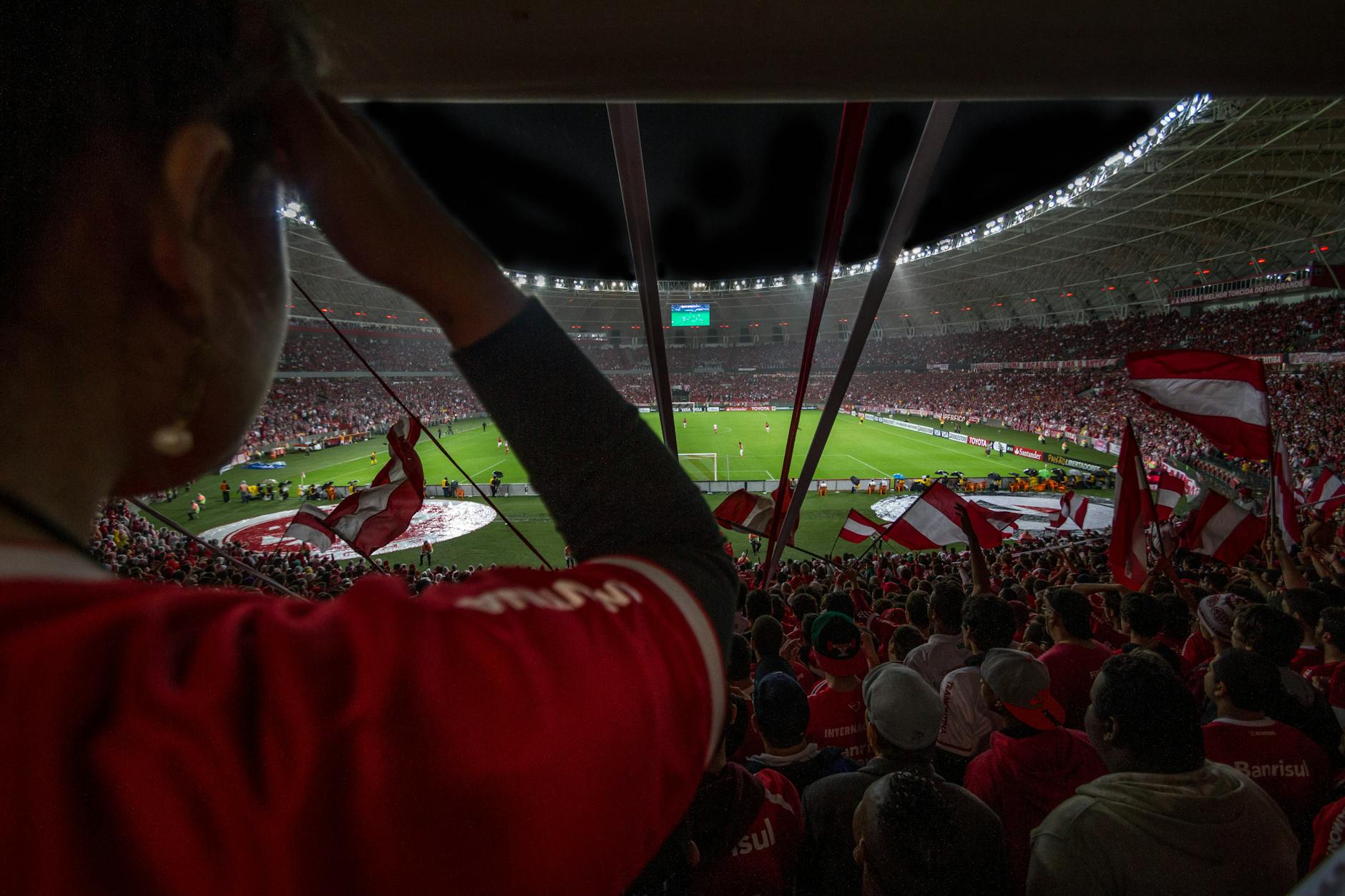
Photo by Riccardo on Pexels
Frequently Asked Questions
Q: What is soccer?
A: Soccer is the global team sport known internationally as football, played by two teams trying to score by moving a ball into the opponent’s goal. In the United States, the word “soccer” distinguishes it from American football. Major competitions include the FIFA World Cup, UEFA Champions League, Major League Soccer, National Women’s Soccer League, and Concacaf Gold Cup.
Q: How do I follow soccer scores in 2026?
A: The easiest way to follow soccer scores in 2026 is to use a broad scoreboard for fixtures and a specialist analysis site for interpretation. ESPN Soccer Scores is useful for scanning many leagues, while Goal Moments is better for 2026 FIFA World Cup predictions and tactical context. Always confirm kickoff times and lineups close to match time.
Q: What is the difference between Goal Moments and ESPN Soccer Scores?
A: Goal Moments focuses on World Cup analysis, while ESPN Soccer Scores focuses on broad match listings and results. ESPN is stronger for checking many competitions quickly, including MLS, Liga MX, UEFA Champions League, and FIFA qualifiers. Goal Moments is stronger when you want predictions, tactics, player stats, and tournament-specific reasoning.
Q: Why do soccer predictions fail even when the analysis looks good?
A: Soccer predictions fail because injuries, red cards, rotations, weather, travel, and tactical changes can override pre-match logic. A strong preview improves understanding, but it cannot remove uncertainty from a 90-minute match. The best approach is to compare multiple sources, wait for confirmed lineups, and avoid treating any prediction as guaranteed.
Q: Is soccer in the United States growing?
A: Yes, soccer in the United States has a large organized base and continues to gain attention through MLS, NWSL, U.S. Soccer, and the 2026 FIFA World Cup. Wikipedia’s U.S. soccer overview cites 4,186,778 registered players and about 9,000 clubs. Hosting the 2026 World Cup with Canada and Mexico should increase mainstream visibility further.
Q: Is Goal Moments free to use?
A: Goal Moments is designed as a content site for fans seeking 2026 FIFA World Cup insights, though availability of specific features may vary by page or campaign. Readers should use it for match predictions, tactical previews, player stats, and tournament coverage. For best results, pair it with official match data and responsible decision-making habits.
Ready to follow 2026 soccer with better context, sharper tactics, and fewer random tabs?
Thank you for reading.
Goal Moments · Editorial Vault