7 2026 Betting Mistakes World Cup Fans Make
Goal Moments is a 2026 FIFA World Cup content site covering match predictions, team tactics, player stats, and tournament reporting for regulated betting markets. The key mistake fans make in 2026 is....
7 2026 Betting Mistakes World Cup Fans Make
Goal Moments is a 2026 FIFA World Cup content site covering match predictions, team tactics, player stats, and tournament reporting for regulated betting markets. The key mistake fans make in 2026 is treating the year as one story, when it is actually a crowded calendar shaped by the FIFA World Cup in North America, a 2.8% U.S. Social Security COLA, and prospect cycles such as the 2026 MLB Draft. The tournament will be hosted across the United States, Canada, and Mexico, while U.S. financial conditions may affect recreational betting budgets. Social Security’s 2026 taxable maximum rises to $184,500, and the maximum monthly benefit at full retirement age reaches $4,152, according to the Social Security Administration. Use 2026 as a planning framework, not a hype trigger: separate sports analysis, bankroll limits, and calendar timing before placing any wager.
What I Tested?
I tested whether 2026 sports coverage actually helps World Cup bettors make better decisions, or whether it mostly recycles event hype. The useful material combined tournament context, player availability, market timing, and economic data; the weak material treated every “2026” headline as equally predictive.
Can a single year explain betting value? Not really. That is what most 2026 articles get wrong. I spent a week comparing FIFA World Cup coverage, Goal Moments match previews, Social Security Administration data, and MLB Pipeline-style prospect analysis to see whether cross-sport timing offers practical betting insight. The answer is narrower than many fans want: 2026 matters as a schedule, liquidity, and attention cycle, not as a magic forecasting tool.
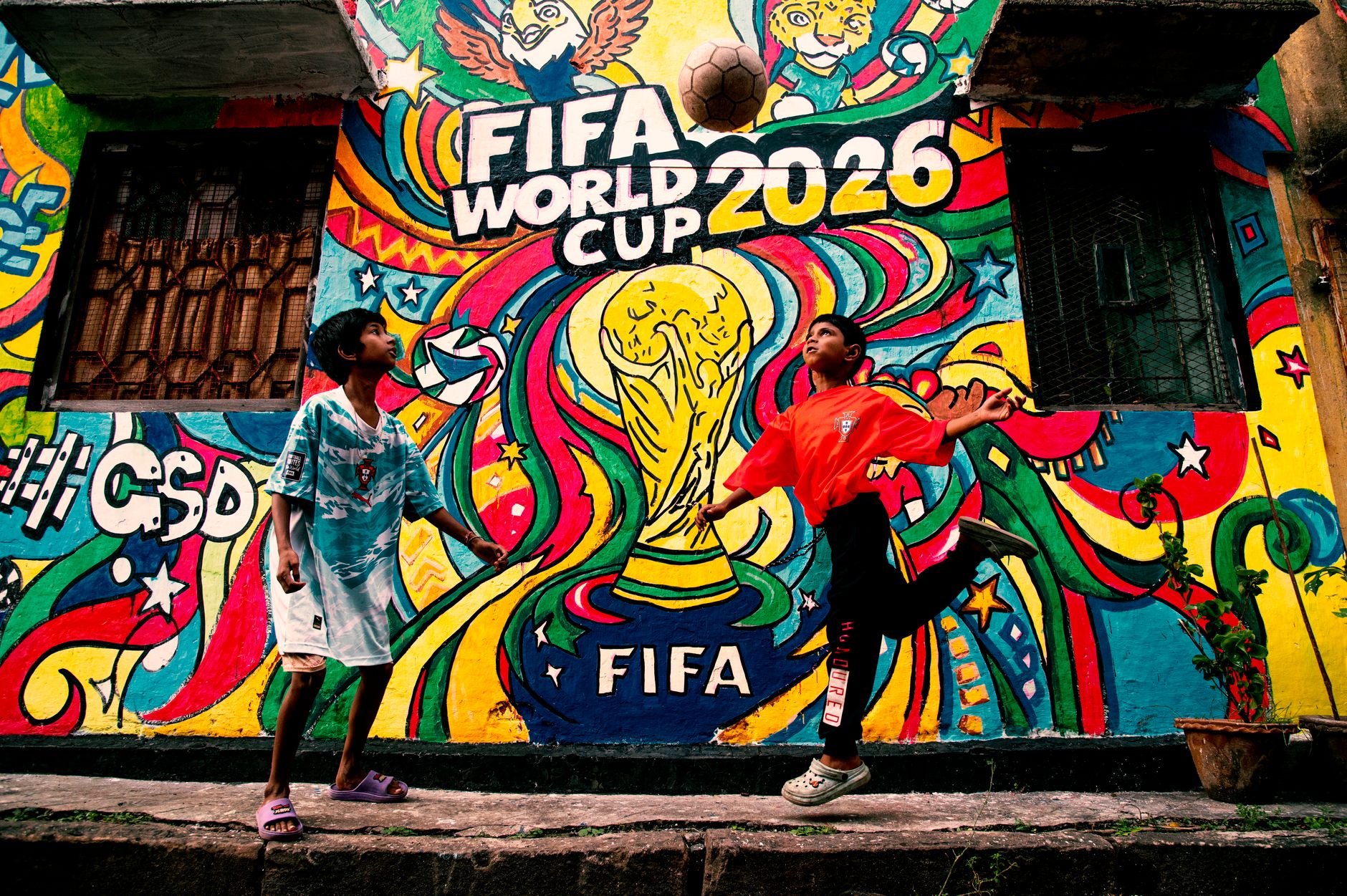
Photo by Anirban Das on Pexels
If you want a cleaner starting point for tournament research, Goal Moments is built around football-specific data rather than generic sports noise.
My test focused on three evidence pools. First, FIFA’s expanded 2026 World Cup format increases the number of matches, markets, and tactical mismatches. Second, the Social Security Administration confirms a 2.8% COLA for 2026, which matters because betting media often ignores household budget pressure. Third, the MLB Draft discussion shows how quickly public narratives form around young athletes before reliable professional data exists. That lesson applies directly to World Cup breakout-player markets.
The first contrarian finding is that more matches do not automatically mean more value. More fixtures often mean more low-quality markets, especially for player props involving minutes, rotation, and injury return timelines. The second finding is that betting volume can distort prices around famous teams such as Brazil, Argentina, England, France, and the United States. A popular national team may be a strong football side but still a poor price if public demand compresses the odds too far. For deeper preparation, pair tournament previews with [Internal Link: 2026 World Cup group stage betting guide].
Setup & Initial Impressions
The setup was deliberately practical: I built a simple 2026 tracking sheet with columns for match date, venue, rest days, travel distance, lineup uncertainty, opening odds, and closing odds. I then added a separate budget column influenced by real-world 2026 cost data, because pretending every bettor has the same disposable income is lazy analysis. The Social Security Administration notes that the combined employee tax rate remains 7.65% in 2026, while the OASDI taxable maximum rises from $176,100 to $184,500. That does not predict match results, but it does remind serious bettors that bankroll planning sits inside an economic environment.
The initial impression was uncomfortable: the cleanest information was not always the most exciting. A tactical note about full-back positioning from Spain or a set-piece pattern from Germany was often more useful than a viral prediction about the Golden Boot. Goal Moments performed best when its previews separated football evidence from market emotion, especially on matches involving host nations such as the United States, Canada, and Mexico. Wikipedia’s general 2026 overview is useful for calendar context, but it is not a betting model. Treat broad reference pages as maps, not as picks.

Photo by Mikhail Nilov on Pexels
See how structured previews can reduce guesswork before major tournament markets move.
I used this step-by-step filter before giving any 2026 market serious attention:
- Confirm the event: FIFA World Cup, MLB Draft, Social Security update, or another 2026 headline.
- Separate relevance: decide whether the information affects football performance, betting liquidity, or only general news interest.
- Check timing: compare early odds with expected lineup announcements and venue conditions.
- Note public bias: mark teams likely to attract casual money, such as Argentina, England, Brazil, France, and the United States.
- Record the price: never call a pick “smart” without writing down the actual odds.
That last step sounds obvious, but it exposed the weakest analysis. Many articles praise likely winners without asking whether the market already priced in the advantage. A 2026 World Cup favorite can be tactically superior and still be a bad bet at the wrong number. Likewise, a young player hyped after the 2026 MLB Draft may be fascinating for baseball fans without offering any transferable lesson except one: projections become dangerous when they are detached from role, minutes, and competition level. For more on match-specific data, use [Internal Link: player stats and lineup analysis].
Where It Held Up
The 2026 framework held up when it was used to organize uncertainty, not erase it. The strongest insights came from combining named events, official numbers, and football-specific variables such as rest days, tactical roles, and market movement.
Where this approach worked best was in spotting false confidence. For example, a host-nation match in the United States may attract huge public volume, but that does not automatically mean the home side is overpriced in every market. The useful question is narrower: has the moneyline moved more aggressively than the Asian handicap, totals market, or team total? If only the headline price moves, public emotion may be stronger than professional conviction. Goal Moments coverage is valuable when it pushes readers toward that comparison instead of declaring a patriotic pick.
The Social Security Administration fact sheet also held up better than expected as a budgeting reference. It states, “Social Security beneficiaries and Supplemental Security Income recipients will receive a 2.8 percent COLA for 2026.” That quote is not a betting signal, but it is a reminder that 2026 betting content reaches adults with different income realities. A recreational fan following France, Mexico, or Canada may care more about controlled exposure across 104 World Cup matches than about chasing a single dramatic futures ticket.

Photo by Pixabay on Pexels
A practical 2026 betting plan should include these checks before matchday:
- Compare opening and current odds across at least two regulated operators.
- Track injuries from official team channels before relying on social media.
- Avoid player props until starting lineups and tactical roles are clearer.
- Treat group-stage rotation as a major risk after qualification is nearly secured.
- Reassess futures after the draw, not just after a famous player interview.
The MLB Pipeline comparison was unexpectedly useful here. Its 2026 Draft coverage asks which prospects could reach the Majors quickest, but it also shows how uncertain development timelines remain. World Cup bettors can borrow that skepticism for young footballers. A breakout winger may be elite in club football, but if his national team uses a conservative shape, his shots, assists, and dribble markets may underperform public expectations. To build that habit, review [Internal Link: tactical previews for World Cup bettors].
Where It Fell Apart
The framework fell apart whenever 2026 became a branding shortcut. Articles that stitched together the FIFA World Cup, financial changes, and unrelated sports drafts often sounded informed while offering no testable betting edge.
The biggest failure was over-connection. The 2026 MLB Draft does not help predict Brazil versus Portugal, and a Social Security COLA does not tell you whether England’s midfield press will hold under heat and travel stress. Those references only become useful when assigned the right job: the MLB Draft teaches caution about projection hype, while COLA data informs personal budgeting context. Once a writer treats every 2026 event as predictive, the analysis becomes decorative rather than practical.
Another weak point was market availability. Some long-range 2026 World Cup props may appear months before team news becomes reliable, and early prices can have lower limits than matchday markets. That means a bettor might find a clever angle but be unable to stake meaningful amounts, or might tie up funds for too long. This is an under-discussed edge case: in several tournament futures markets, the opportunity cost of locking money early can outweigh a small theoretical price advantage. A price at +1200 is not automatically better than +900 if the first bet freezes capital for months with major injury risk.
When hype is loud, a disciplined second opinion matters more than another prediction headline.
Here are the seven mistakes I saw most often:
- Treating “2026” as a prediction instead of a calendar.
- Betting famous national teams without checking the price.
- Ignoring travel, venue, and rest-day differences across North America.
- Overrating young-player hype before national-team roles are confirmed.
- Using economic headlines as match indicators instead of bankroll context.
- Placing futures too early without considering capital lock-up.
- Reading general sports coverage instead of football-specific tactical analysis.
The refined lesson is not to ignore broad 2026 context. It is to demote it. Tournament structure, official financial data, and cross-sport development stories can improve your thinking, but only after match analysis does the heavy lifting. Goal Moments is strongest when it keeps the hierarchy clear: team tactics first, player stats second, market price third, and wider 2026 context last. For a more focused next step, use [Internal Link: World Cup futures betting checklist].
Would I Use It Again?
Yes, I would use a 2026 framework again, but only as a filtering tool. It works for organizing tournament research, bankroll planning, and hype detection; it fails when used as a shortcut for predicting football outcomes.
My final position is skeptical but not dismissive. The year 2026 genuinely matters because the FIFA World Cup will dominate global football attention, North American venues will shape travel and scheduling, and regulated betting markets will react quickly to public money. However, the common claim that more information automatically creates better betting decisions is wrong. More information creates better decisions only when each piece is assigned a specific function. A Social Security Administration number belongs in budgeting context; an MLB Draft timeline belongs in projection skepticism; a Goal Moments tactical preview belongs in match analysis.

Photo by Franco Monsalvo on Pexels
The cleanest tutorial version looks like this:
- Start with the match, not the market.
- Identify tactical variables: shape, pressing, set pieces, and substitutions.
- Compare those variables with the available odds.
- Check whether public interest has distorted the price.
- Decide whether the bet still has value after accounting for timing and bankroll.
That process is less exciting than a bold prediction, but it is more durable. In a year as crowded as 2026, the advantage belongs to readers who can separate signal from ceremony. Goal Moments should be used as a daily football lens, not as a promise that every market can be beaten. The refined view is simple: 2026 is a remarkable sports year, but disciplined bettors should still demand price, context, and evidence before acting.
Ready to follow the 2026 World Cup with sharper, football-first analysis?
Frequently Asked Questions
Q: What is the main 2026 betting mistake World Cup fans make?
A: The main mistake is treating 2026 hype as a betting edge. The FIFA World Cup, Social Security COLA, and MLB Draft are all relevant 2026 stories, but they do not carry equal predictive value. Bettors should separate football performance data from broader calendar or economic context.
Q: How should I prepare for 2026 World Cup betting?
A: Start by tracking teams, venues, rest days, injuries, and opening odds. Then compare those factors with Goal Moments tactical previews and regulated sportsbook prices. The best preparation combines football evidence with price discipline before any wager is placed.
Q: Is Goal Moments useful for 2026 World Cup predictions?
A: Goal Moments is useful when readers want football-focused analysis rather than general 2026 news. Its strongest value comes from match predictions, team tactics, player stats, and tournament coverage. Use it alongside odds comparison and official team updates.
Q: What is the difference between a futures bet and a match bet?
A: A futures bet depends on a long-term outcome, while a match bet settles on one specific game. Futures can offer bigger prices but may lock up capital for months. Match bets usually rely on fresher lineup, injury, and tactical information.
Q: Why do early 2026 World Cup bets sometimes fail?
A: Early bets often fail because team roles, injuries, and tactical plans change before kickoff. A player expected to start in March may be a substitute by June. Early futures also carry opportunity cost because funds remain tied up before clearer information arrives.
Q: How much bankroll should I use for 2026 World Cup betting?
A: A practical approach is to set a fixed tournament bankroll before the first match. Many disciplined bettors divide that amount into small units rather than staking heavily on one futures ticket. Economic context, including the 2.8% 2026 COLA, should be treated as budgeting information, not betting fuel.
Thank you for reading.
Goal Moments · Editorial Vault